Earliest evidence of cannabis use found in ancient Siberian tomb

By Jack Guy
(CNN) — Archaeologists have found the earliest evidence of people consuming cannabis for psychoactive purposes in a tomb dating back almost 3,000 years, according to a new study.
Researchers found preserved cannabis seeds and human hair at the monumental elite tomb in southern Siberia, lead study author Gino Caspari, a researcher at the University of Bern, Switzerland, told CNN.
“There is a lot of speculation about prehistoric use of plant-based drugs, but through this find we are actually able to show that there is a basis to it,” he said.
The tomb is located in the Uyuk Valley and contains the remains of various high-status individuals. Caspari and colleagues have been working there since 2017, uncovering evidence that the tomb dated from 2,800 years ago, during the earliest Scythian period.
“These were nomadic horse-back riders known for their skill of shooting from horseback and for their exquisite gold items,” he said.
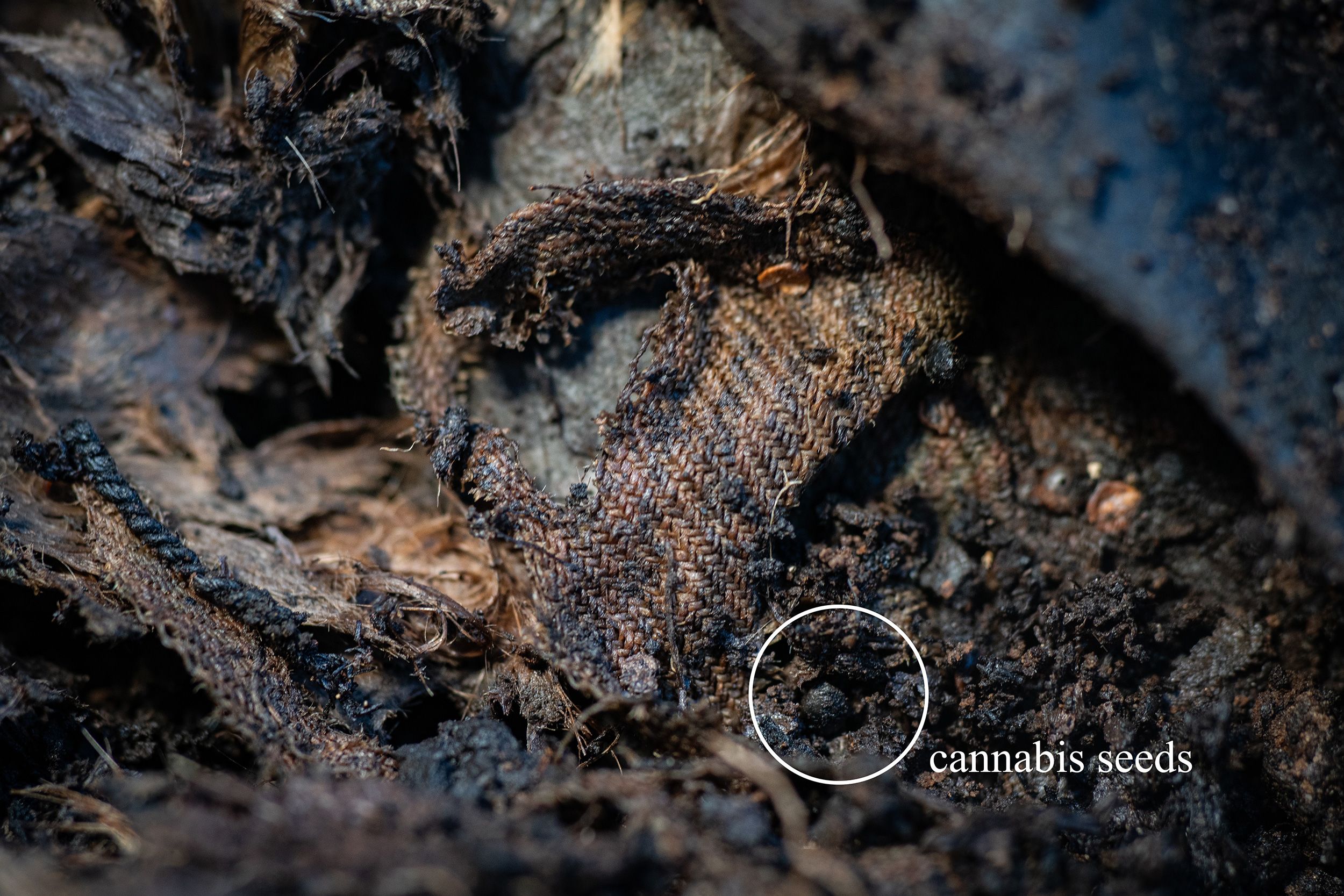
At the site, Caspari and his colleagues spotted small black dots in the tomb and were able to identify them as cannabis seeds. They eventually recovered more than 1,400 of them and used radiocarbon dating to ascertain that they had been deposited around 2,800 years ago.
Drug-testing ancient remains
They also found preserved human hair, which they tested using a mass spectrometer.
“Surviving plant remains which are almost 3,000 years old are extremely rare,” Caspari told CNN, as they are generally poorly preserved.
“It is even rarer to find them in combination with human soft tissue like hair, which essentially allows (us) to drug test a person who has been dead for three millennia.”
Analysis revealed that the hair tested positive for THC (delta-9-tetrahydrocannabinol), the primary psychoactive compound in cannabis, as well as cannabinol, a chemical compound produced when THC is exposed to air.
“That was just an amazing moment,” said Caspari, who said that the discovery adds to our understanding of the history of the consumption of cannabis.
Up to now, scientists had found evidence that cannabis was cultivated in East Asia at least 6,000 years ago, probably for its oil-rich seeds, according to a statement from the researchers.
Evidence of the plant’s use for its mind-altering effects had previously been found as far back as 2,500 years ago, including in ritual practices in Central Asia, the statement adds.
“The cannabis use has to be seen in a ritual context in the tomb and may be connected to shamanistic beliefs,” Caspari told CNN.
“Since we have dozens of sacrificed horses and some potential human sacrifices it might also have been used to sedate the victims before something bad happened to them — but we cannot prove that,” he said.
“Surprisingly little is known about the deep time cultural history of this important crop. For example, we are not even sure what truly wild cannabis actually looks like,” he added.
“Now we have at least 3,000 years of psychoactive cannabis consumption on the Eurasian continent and it seems that at this point it was already spread from China to Europe,” he said.
“We think this provides a cultural anchor point for current debates on legalization and medical use of the plant.”
Caspari added that the team are now sequencing the ancient DNA of the seeds they found at the site.
“Having well-preserved plant DNA is even rarer than having plant remains and this is the oldest preserved cannabis DNA,” he said.
“In the next few years our team will probably rewrite part of the domestication history of cannabis.”
Roger Forshaw, an honorary lecturer in biomedical Egyptology at the University of Manchester, England, who was not involved in the study, told CNN that the research “provides some fascinating insights into the use of cannabis among early Iron Age communities in Central Asia, a practice for which direct archaeological evidence has previously been scarce.”
The fact that chemical traces of cannabis were found in the hair “provides direct molecular evidence of cannabis use and supports the interpretation that it formed part of the funerary rituals,” he said.
“Although we cannot be certain how the plant was administered or precisely what role it played in the burial rituals, the discovery adds considerably to our understanding of the use of psychoactive plants in ancient societies,” Forshaw added.
The study was published Thursday in the journal Science.
The-CNN-Wire
™ & © 2026 Cable News Network, Inc., a Warner Bros. Discovery Company. All rights reserved.
