83% of peptide-aware Americans want the FDA to make peptides more accessible


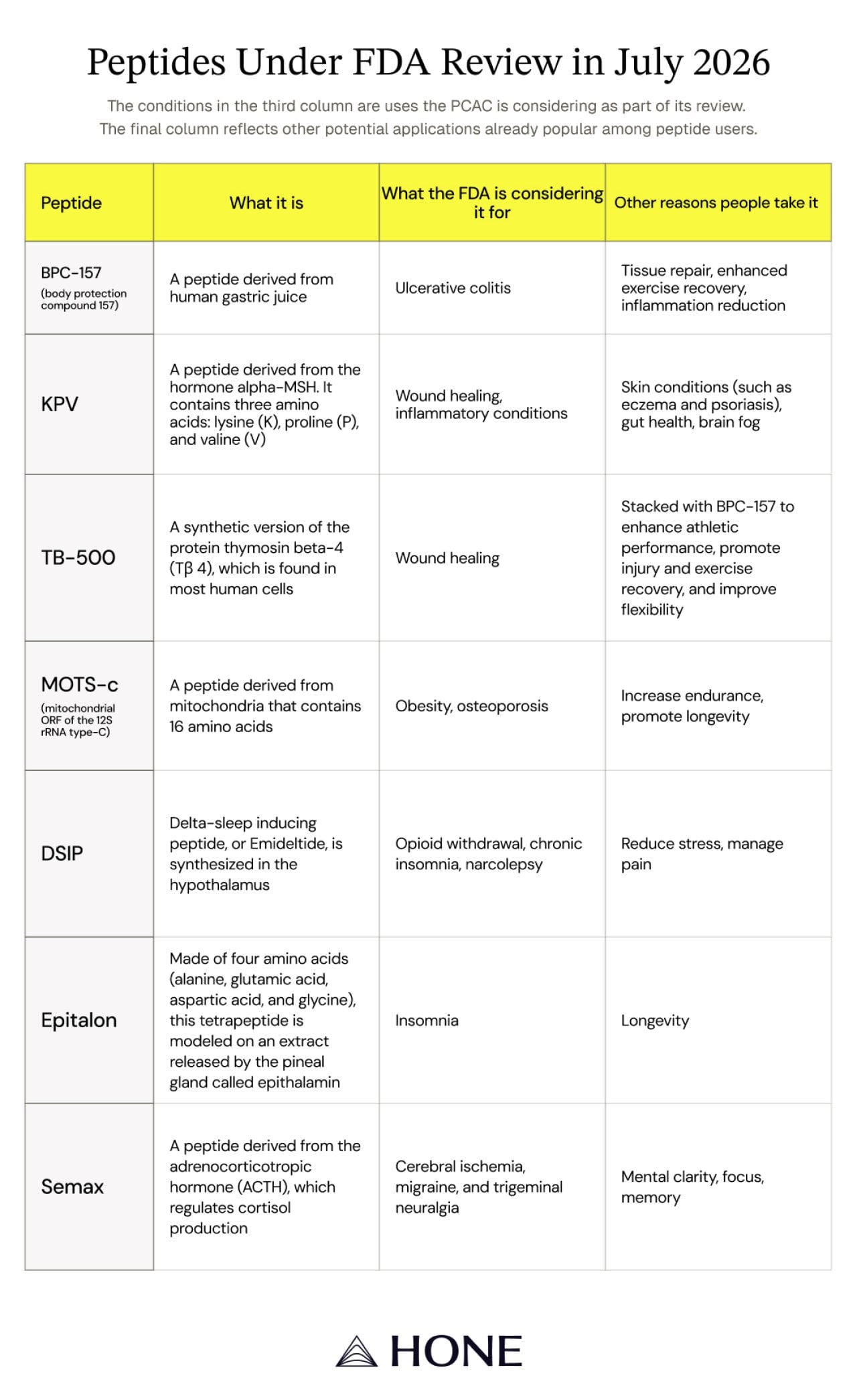
Days before an FDA advisory committee meets to consider whether seven widely used peptides — BPC-157, TB-500, KPV, MOTS-c, Emideltide (DSIP), Semax, and Epitalon — should become eligible for compounding, a new survey suggests that’s what Americans want.
Among 2,491 U.S. adults familiar with peptides as a health and wellness tool surveyed by longevity care platform Hone Health in May 2026, 83% support allowing licensed compounding pharmacies to produce popular peptides with a physician’s prescription.
Abid Husain, M.D., a triple-board-certified physician specializing in peptide therapy who will be presenting at the meeting, says its outcome could open a safer pathway for consumers, many of whom are currently buying unregulated grey-market peptides online, which often contain the wrong dosage, harmful contaminants, or completely different substances..
“Right now, most people can’t get these compounds in a safe, controlled manner, so they get them however they can,” says Husain. “And that means putting themselves at exceptional risk.”
What Is the FDA Reviewing at the July 2026 Peptide Meeting?
The Pharmacy Compounding Advisory Committee (PCAC) advises the FDA on which ingredients compounding pharmacies can use to make prescription medications.
At its July 23 and 24 meetings, the committee will consider whether the seven peptides should be added to the 503A Bulks List. Inclusion would allow licensed pharmacists and physicians to use them in patient-specific compounded prescriptions.
PCAC will make recommendations to the FDA, which will consider the committee’s advice as well as public comments before making a final decision.
If the FDA moves these peptides to the 503A Bulks List, it doesn’t mean that they are approved as drugs. But it would allow physicians to prescribe them — both for the conditions discussed during the meeting, such as ulcerative colitis in the case of BPC-157, but also other uses when medically appropriate, such as athletic or cognitive performance.
“I’m anticipating we’ll know where these peptides sit in the recategorization by November or December,” Husain says.
Survey Data Show People Are Already Using These Peptides
Hone’s survey confirms that the peptides on the FDA’s agenda are already part of many Americans’ wellness routines, despite the lack of a clear prescription pathway.
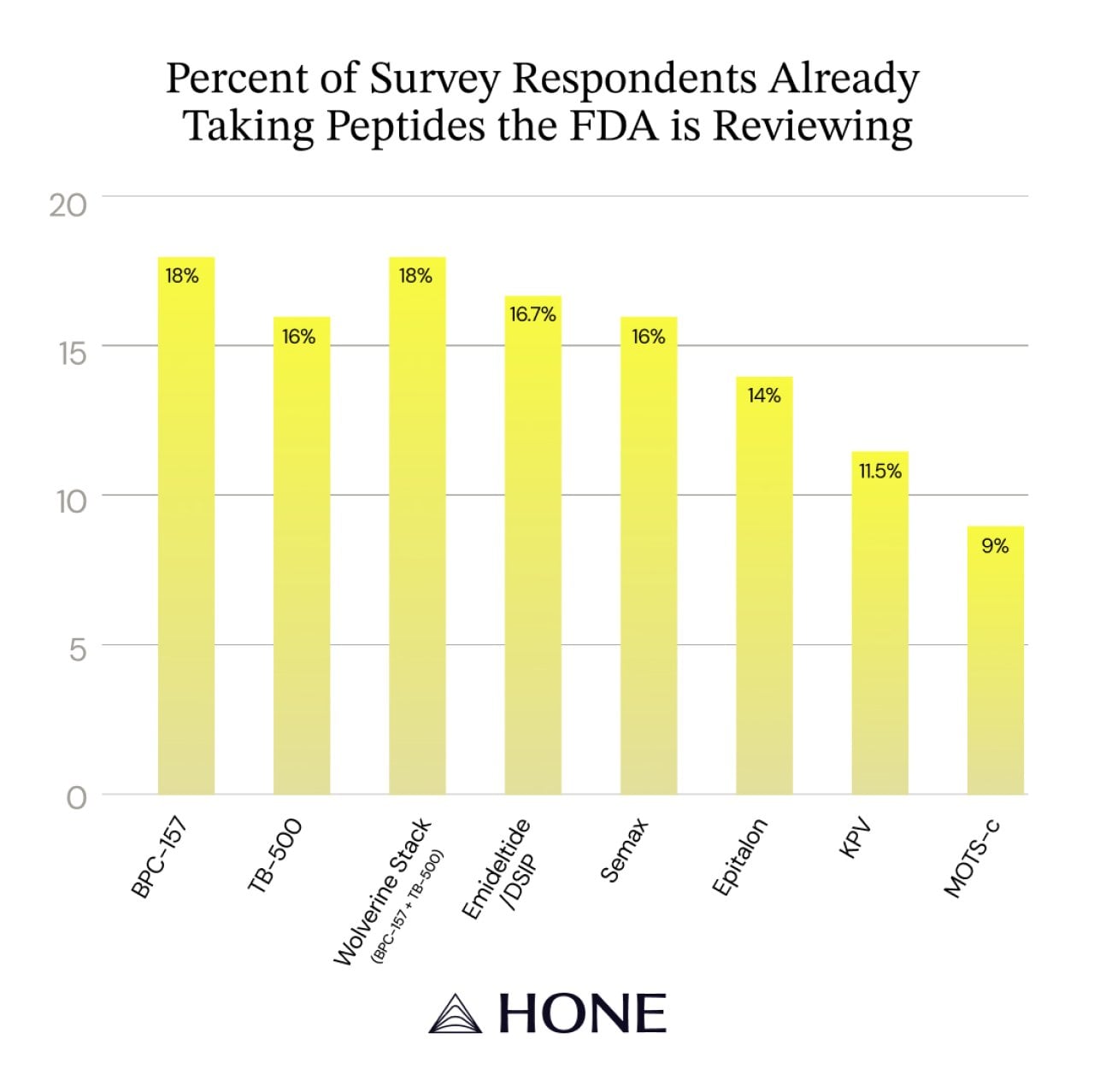
The peptides under review are often sold online with labels such as “for research use only,” meaning they are intended for laboratory research rather than human use. Gray-market peptides may contain the wrong concentration, impurities, contaminants, or a different substance altogether, Husain says. Consumers may also be left to determine dosing and monitor side effects on their own.
“If someone experiences benefits or side effects, we don’t know if they’re from the peptide or because of impurities, endotoxins, or anything else that could be in there,” Husain says.
Those risks haven’t eliminated demand, but they may be discouraging some prospective users. Per Hone Health’s survey, 39% of peptide-curious Americans said FDA reclassification would be the single biggest reason they would try peptides or use them more often.
What Would Physician-Supervised Access Change?
If the FDA adds any of these peptides to the 503A Bulks List, eligible compounding pharmacies could prepare them for individual patients with valid prescriptions.
Licensed compounding pharmacies add multiple safeguards. Licensed compounding pharmacies typically:
- source pharmaceutical-grade active ingredients from qualified suppliers
- prepare medications in sterile facilities
- follow quality-assurance procedures
- employ licensed pharmacists
- operate under state oversight and FDA inspection
That oversight also matters to consumers. In Hone Health’s survey, 9 in 10 respondents said physician involvement would significantly or somewhat increase their trust in peptides.
Doctors could screen patients for contraindications, prescribe appropriate doses, and monitor treatment over time. They could adjust therapy based on a patient’s response instead of leaving people to navigate peptide use through Reddit, AI, and other unqualified sources.
“There’s a responsibility that physicians and other practitioners bring to using these medications,” Husain says. “They have to be used in a therapeutic manner with attention to the indications, effects, and side effects.”
Hone Health surveyed 2,491 U.S. adults familiar with peptides as a health and wellness tool from May 8-11, 2026. The sample included adults ages 18 to 60+, with representation from all major U.S. regions. Sixty-one percent of respondents were female and 39% were male. Household incomes varied widely, with the largest share earning $75,000 to $99,999 annually.
This story was produced by Hone Health and reviewed and distributed by Stacker.
