Statehouse roundup, 2.10.26: Launch fund transfers will cut student aid, director says


Originally posted on IdahoEdNews.org on February 10, 2026
by Kevin Richert and Ryan Suppe:
A $10 million transfer from the Idaho Launch fund would cut into student aid this year, the program’s director said Tuesday.
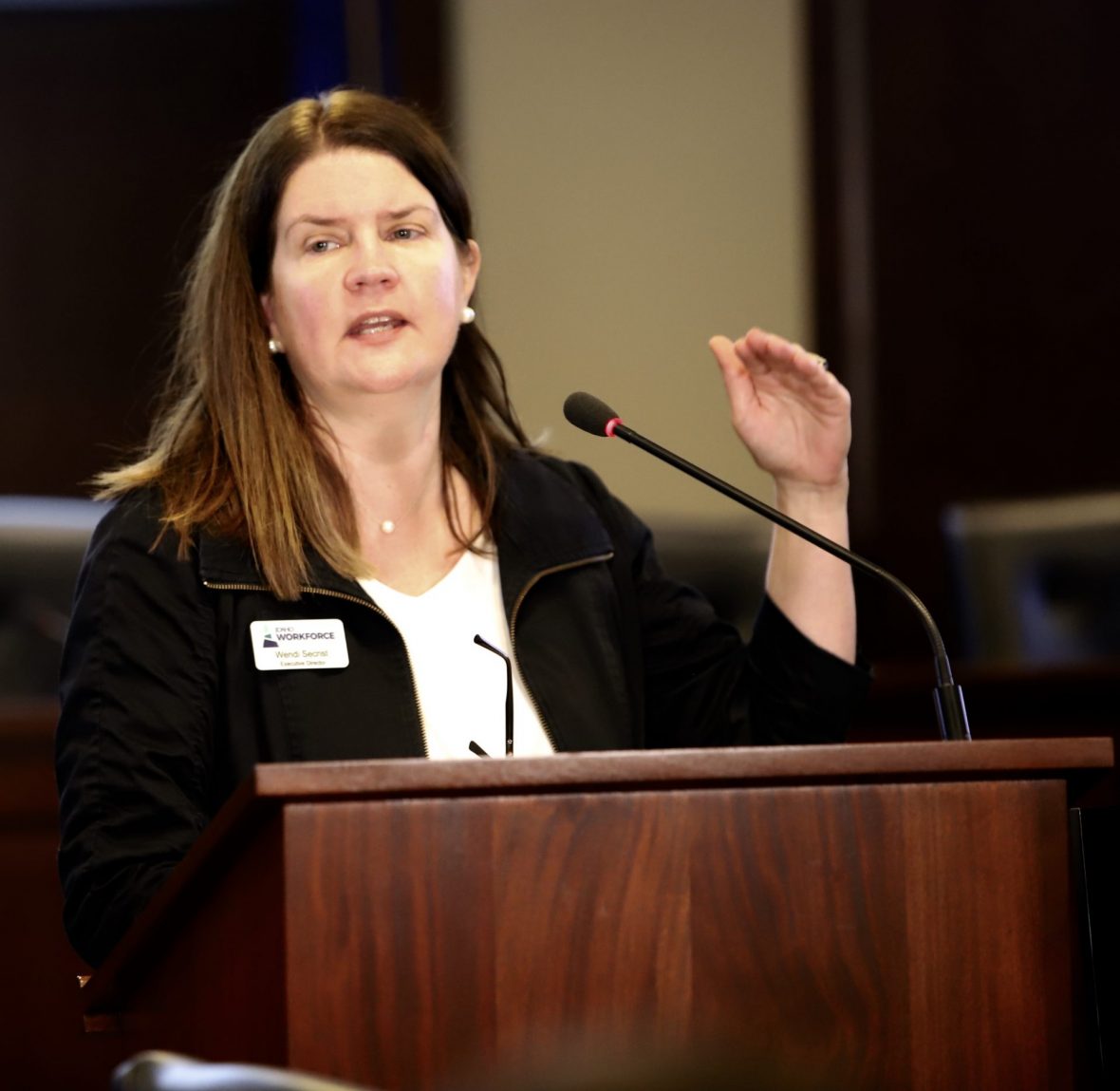
“We would have to curtail the number of awards that we make,” Wendi Secrist, executive director of the Workforce Development Council, told EdNews after a Joint Finance-Appropriations Committee presentation.
The $75 million-a-year Launch program provides high school graduates with up to $8,000 for college or career training. But Launch has long been a target of Statehouse conservatives — and in a cash-strapped 2026 session, the program will likely face another round of scrutiny.
On Monday, JFAC approved a pair of transfers from the In-Demand Careers Fund, which finances the Launch program. The first $10 million transfer would cover the current budget year, which ends June 30. The second $10 million would cover the next budget year — and the next round of Launch awards.
Secrist indicated that her department could cover the $10 million transfer this year, from personnel savings and from unused awards money. For next year, however, the timing and the math is more complicated.
Next year’s Launch budget covers awards for this year’s high school seniors. They can apply for Launch grants until April 15. So far, about 10,200 seniors have applied, Secrist said Tuesday.
If the state winds up awarding 9,000 grants — a reasonable forecast, based on how many applicants have used Launch money in past years — this would come to about $72.4 million. And this would exhaust the money in the fund for next year, Secrist said.
A $10 million fund transfer would come off the top, and that means the Workforce Development Council would award fewer grants this summer, Secrist said Tuesday.
“That’s what I was afraid of,” Sen. Janie Ward-Engelking, D-Boise, said during Tuesday’s JFAC hearing.
Ward-Engelking was one of two JFAC members who opposed Monday’s transfers. They passed on identical 18-2 votes.

While Ward-Engelking decried a possible Launch budget cut, another JFAC member cast a skeptical eye toward continued funding. “Why should JFAC treat Launch as a proven?” said Rep. Elaine Price, R-Coeur d’Alene.
While Launch is in its infancy, Secrist said the program is already making a difference. She cited State Board of Education research which says Launch has improved Idaho’s post-high school go-on rates, while encouraging students to stay in state. But it will take time to measure outcomes — such as the number of Launch graduates who have gone into the workplace and stayed in Idaho.
“Right now, we’re showing outputs for the most part,” Secrist said.
Virtual school regulations easily clear House committee
A bipartisan bill overhauling state regulations of virtual public schools cleared the House Education Committee with little debate Tuesday.
Among other things, the proposal would limit eligible expenses for the “supplemental learning funds” that virtual schools offer parents. It comes after the Office of Performance Evaluations last year released a report that highlighted questionable uses of the funds by patrons of the Idaho Home Learning Academy (IHLA), the state’s largest virtual school.
A handful of virtual school leaders spoke in support of the bill during a public hearing Tuesday. IHLA Superintendent Terri Sorensen said it balances accountability, transparency and parent choice, and she lauded the “collaborative spirit” of its legislative sponsors.
“IHLA has been such a great, willing partner to recognize their need to change,” said sponsoring Rep. Douglas Pickett, “to change their policies, to gain wide, broad acceptance for what they’re doing.”
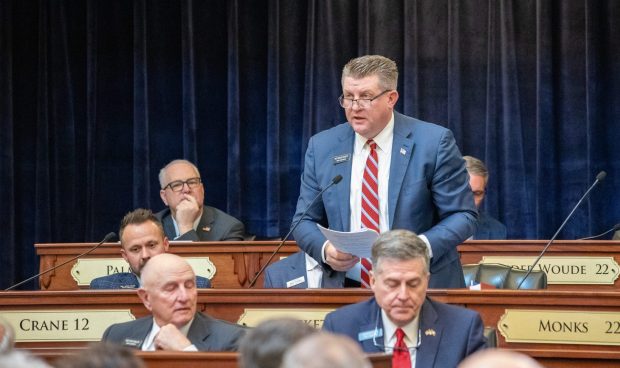
Pickett, R-Oakley, is co-sponsoring the bill with Rep. Soñia Galaviz, a Boise Democrat and public school teacher, along with Rep. Clay Handy, R-Burley.
The proposal, originally House Bill 588, will have a new bill number when it reaches the House floor. The co-sponsors introduced a replacement Tuesday that tweaked the language defining “supplemental learning funds.”
The new version would still limit eligible fund uses. Parents would be allowed to use them for education-related technology like laptops along with books, test fees, therapies and other expenses approved by the State Board of Education.
The bill would also require additional transparency around private vendors that virtual schools contract with for online classes. Virtual schools would have to publicize the services the vendors provide, along with their costs.
The bill would also require that virtual classes align with state content standards and that they’re taught by a state-certified instructor.
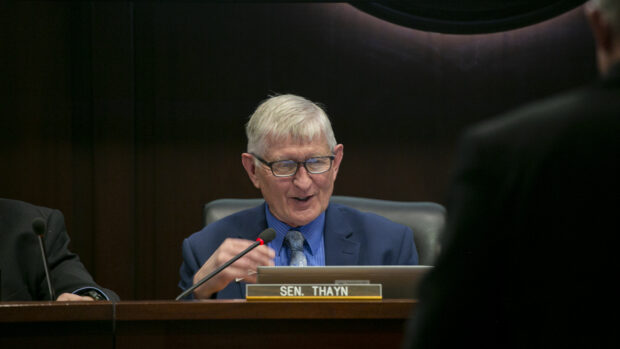
One person — former state Sen. Steven Thayn of Emmett — spoke against the bill Tuesday. Thayn argued that the bill would restrict flexibility around the type of classes virtual schools offer.
“The gold standard of school choice is parents being able to choose the curriculum,” he said. “Parents have more say into what curriculum is used. It might be more patriotic curriculum. They still have to meet the standards.”
Galaviz said that the bill protects local control of curriculum. But, like any other public school, virtual school curriculum must be guided by state content standards, and virtuals must conduct standardized testing.
“I feel very confident in saying that the Idaho Home Learning Academy wants to focus on kids,” she said. “We all want to make sure that we are ensuring academic success and growth.”
The committee unanimously voted to send the bill to the full House.
House rejects Blaine Amendment repeal
The House voted down a proposal to use public dollars to fund religious education.
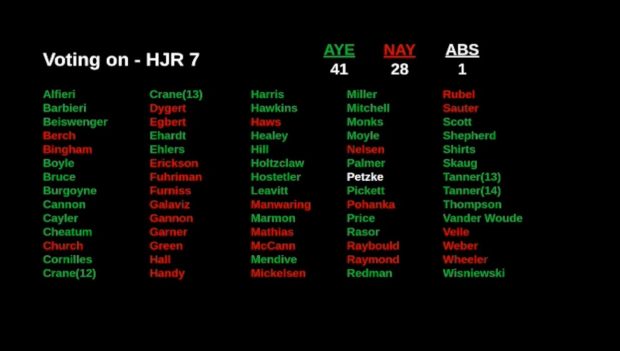
House Joint Resolution 7 would have repealed Idaho’s “Blaine Amendment,” which prohibits taxpayer support of religious-based schools or enterprises. The amendment, and similar language in other state constitutions, has become a focal point in the debate over private school choice.
“This is discrimination based on religion,” sponsoring Rep. Elaine Price, R-Coeur d’Alene, said of the Blaine Amendment.
However, Price also said the repeal itself wouldn’t affect any public funding; this would only occur later. She added that the amendment would simply put the question before voters, who must ratify any constitutional amendment.
No House member debated for or against the repeal, and it came up for an unexpectedly quick vote.
In the end, 41 House members voted for repeal, while 28 members voted no. However, constitutional amendments must pass each house with a two-thirds majority.
Nineteen Republicans joined the House’s nine Democrats in opposition.
IDLA budget cuts debut in House
Lawmakers got their first look Tuesday at a proposal to scale back state support for the Idaho Digital Learning Alliance. Gov. Brad Little proposed cutting 39% from the online learning platform.
Rep. James Petzke’s proposal would make a hodgepodge of changes to IDLA’s $26 million state budget. It would:
- Reduce IDLA’s per-enrollment state allocation from $445 to $427.
- Limit yearly course enrollments to three per student.
- Eliminate state funding for IDLA’s Elementary Launchpad program and driver’s education courses.
- Prohibit private- and home-school students from receiving state funds for IDLA courses.
- Cut state funding for “custom” IDLA sections in urban districts — courses in which all enrollments come from a single district in cities with more than 50,000 people.
“It rightsizes their budget while minimizing the hurt to their core mission,” Petzke, R-Meridian, told the House Education Committee. “We’re not getting rid of the things that we think that IDLA does really well.”
Districts and charter schools could continue offering the courses targeted for cuts, Petzke noted. But the local school would take on responsibility for paying the fees — or passing on the costs to parents.
The proposed reforms would reduce IDLA’s state funding by $8.96 million. This doesn’t include savings from excluding home-schoolers from the platform. These savings are difficult to project, Petzke said.
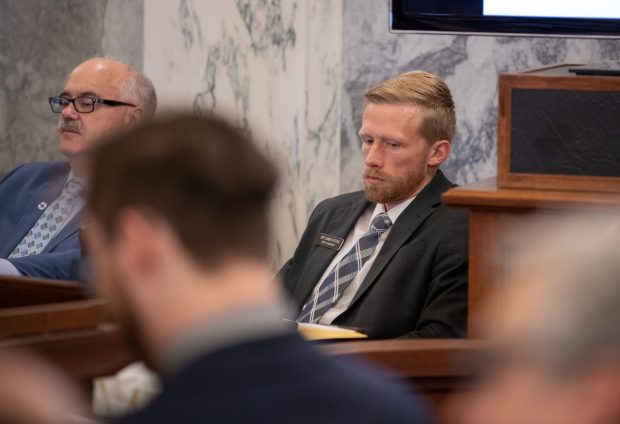
But the bill doesn’t explicitly address the IDLA budget issue that drawn scrutiny from lawmakers and Little. Rep. Kent Marmon, R-Caldwell, asked whether the bill tackles “double-dipping” — when brick-and-mortar schools collect state funds for a student who’s logged into an online course through IDLA.
Petzke responded that the proposed changes will pull out some of the “double-funding.” But IDLA provides the content and teachers for the courses it offers to districts and charters, he said, so concerns should be addressed in the budgets for brick-and-mortar schools.
“IDLA should be getting the money, not the districts,” Petzke said. “That’s a broader funding-formula question that I think that we need to tackle at some point.”
Petzke’s bill may not be the only one tackling IDLA’s budget this session. Rep. Clint Hostetler, R-Twin Falls, said Rep. Elaine Price, R-Coeur d’Alene, is working on a separate proposal.
IDLA’s superintendent, Jeff Simmons, and other administrators from the agency worked with Petzke on the bill introduced Tuesday.
“They don’t love it, as no agency would, right?” Petzke said. “This is a massive, massive cut to their budget. But they have seen it, and they do think this is the best path forward given the circumstances.”
New bill directs public schools to hold daily periods of silence
Public schools could soon be required to hold daily, one-minute periods of silence allowing students to “reflect, meditate, pray or engage in another silent activity.”
Sponsoring Rep. Bruce Skaug told the House Education Committee that dozens of other states have enacted similar laws. A pastor and a rabbi approached Skaug with the proposal, the Nampa Republican said.
“The silence isn’t religious or irreligious,” Skaug said. “You can pray, you can meditate or just think about your day.”
Committee members debated whether the bill should mandate the time of day that each period of silence must occur. The bill requires they be “at or near the beginning of each school day.”

Rep. Chris Mathias, D-Boise, moved to take out this provision of the bill and allow schools to conduct the exercise at any time of day. The motion failed on a 5-9 vote.
Rep. Tony Wisniewski argued that a morning period of silence would “set the tone for the whole day.” Wisniewski, R-Post Falls, compared it to the House and Senate praying and reciting the Pledge of Allegiance at the beginning of each floor session, which establishes an “atmosphere” and “reverence.”
“If we leave it up to the teacher, and if a teacher is not in agreement with this principle, what could happen?” he said. “I have often said that if you can’t think like a criminal, you don’t belong in the Legislature.”
The committee voted to introduce Skaug’s bill, setting the stage for a future public hearing.
A divided House makes an appeal for special education funding
A nonbinding request for federal special education funding passed Tuesday, but over significant opposition.
House Joint Memorial 11 calls on Uncle Sam to cover 40% of special education costs — as promised with the 1975 passage of the federal Individuals with Disabilities Education Act. The feds cover about 12% of Idaho’s special education costs, leaving the state and local schools to pick up the balance.
“This is a long overdue collection notice,” said Rep. Ben Fuhriman, R-Shelley, the memorial’s sponsor.
During brief debate, Rep. Lucas Cayler said the state shouldn’t demand more money from a federal government more than $38 trillion in the red. “I think everyone would agree that our federal debt is in a very, very bad place,” said Cayler, R-Caldwell.
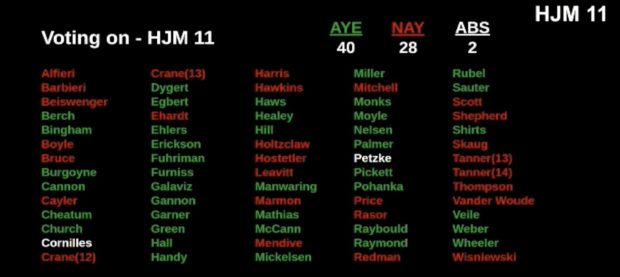
The memorial passed on a 40-28 vote. Notably, five of the 10 members of the House Appropriations Committee — the budget-writing panel that writes up spending bills for K-12 — were among the opponents.
The memorial now heads to the Senate.