Three years. A hundred hours of negotiations. Few financial gains for Idaho Falls teachers.


by: Sean Dolan
The lead negotiator for the Idaho Falls Education Association said teachers are afraid to speak up. They’re afraid of retribution from leadership.
“The way things are being done has scared people into submission a little bit, and it is not what I like to see for my friends and colleagues,” union negotiator Meggan Stansbury told EdNews on Monday.
For the third year in a row, ever since Superintendent Karla LaOrange was hired, contract negotiations between the union and district have broken down and gone to mediation. Negotiation and mediation has taken up more than 100 hours in this time span, and very little has changed from the district’s initial offers.
The union and the board last week ratified a collective bargaining agreement, which means teachers this year will have a union contract in place before they return to the classroom. Last year, the two parties could not come to an agreement until September, after classes had already begun.

LaOrange said having a contract in place before mid-June is a sign of progress. Negotiations this year were positive and professional, she said.
“Clearly, the efforts of the board are helping and have helped move us forward,” LaOrange said.
The board of trustees both this year and last year elected to ask for mediation and hired Boise-based attorney Amy White — of law firm Anderson, Julian & Hull — to serve as the district’s spokesperson during negotiations.
White charges the district $210 per hour and has logged 160 hours during two negotiation seasons, according to invoices EdNews received through a records request. (Some of her time was for other tasks and some tasks were redacted.) The district has paid her $33,600 across seven invoices and another $1,782 for mileage reimbursement to travel to Idaho Falls. The invoices do not include charges accrued this month.
Stansbury said the teachers on the negotiating team are volunteers.
“Knowing that we sit down with somebody who gets paid for every hour and does most of her proposals while we are sitting there waiting is frustrating because our team always does our homework,” Stansbury said.
The parties this year negotiated for 16 hours and then met in mediation for nine hours. Mediation is typically behind closed doors, but 20 minutes of the livestream was left open to the public.
“There is no more money,” White told the union members in the video. “I wish there was. I really wish there was.”
No one is getting raises, she said, because nobody in the state has money. State funding is flat and insurance costs are increasing.
Both LaOrange and Stansbury said the hours of mediation changed nothing. The agreement provides no increases to base salary, but does allow for movement on the career ladder and for years served. The average salary for teachers will increase by 2.65% due to that movement, according to LaOrange.
First year under LaOrange
Before trustees in 2023 selected LaOrange to replace outgoing Superintendent Jim Shank, the superintendent was never directly involved in negotiations, according to veteran teacher and past union president Julie Nawrocki.
But that changed in LaOrange’s first year.
“She insisted on being at the table and being part of negotiations, and it probably was the start of our downfall, in reality — our relationship with the association and the district,” Nawrocki said.
Nawrocki was union president from 2021 to 2024, has 15 years of personal knowledge on union negotiations in Idaho Falls and has 24 years of teaching experience.
Back in the day, she said, the union would have five teachers at the table sitting across from five district-level administrators for two or three days. She said LaOrange wanted to increase the number of people sitting at the table. Building principals, the finance director and superintendent were now part of the team.
LaOrange confirmed that detail. She said she had eight to 10 people on each team that year.
“We had very large teams,” LaOrange said.
Nawrocki said the district team told the union that they were freezing salaries, with no movement allowed on the career ladder. She said it came out of the blue, and there was no financial emergency at the time.
“Basically, we were told, ‘This is it,'” Nawrocki said. “There’s nothing else, there’s no other option. They didn’t want to talk, very unusual.”
LaOrange disputed that account and said the board directed the negotiating team to start with no increases to base salaries, but never discussed freezing movement. But as soon as the district presented that plan to the teachers, they walked out.
“So we never had an opportunity,” LaOrange said. “We didn’t get a response, and we were quite surprised that they walked out.”
After the initial publication of this story, union members sent EdNews an audio recording of district Finance Director Lanell Farmer telling union negotiators that the direction of the board is no increase to the salary schedule and no steps. Negotiator Jake Snarr then asked Farmer what “no steps” means.
“No advancement,” Farmer said in the recording.
Nawrocki told EdNews the union did not ratify the agreement at first and requested mediation, which lasted one day. She said they found a good compromise and eventually ratified.
Second year under LaOrange
As LaOrange mentioned, the board of trustees requested a lawyer to negotiate for the 2025-26 contracts.
Negotiations lasted 29 hours and mediation took 47 hours, LaOrange said.
Nawrocki said the union and White, the district’s hired attorney, were passing proposals back and forth during negotiations.
“[White] complimented the team on how much progress they made that night, and then she came back out and was like, ‘The board wants to go to mediation,’ and so they went to mediation last year, that would be the second time in a row,” Nawrocki said.
Mediation ended in September, after classes had already begun. Nawrocki said this had an impact on teacher morale, attraction and retention.
“We will lose teachers to other districts,” she said. “We won’t get new teachers in because they’re like, ‘There’s turmoil at the district office, we can’t seem to get contracts. Three years in a row, this has happened.'”
Third year under LaOrange
Mediation was required again with Stansbury, the lead negotiator for the association this year.
She told EdNews that she has resigned and will not be returning to Idaho Falls next year. She is moving to Wyoming.
“This was my last year in the district, and a big portion of that is due to the board and the superintendent,” Stansbury said.
From her perspective, she said negotiations this year were moving along nicely and the two parties were “trucking through a lot of language.” But then, at hour 16, White said on behalf of the district she is requesting that the parties move to mediation under the Federal Mediation and Conciliation Services, which is free.
Stansbury said that blindsided the team. She said going to mediation was frustrating and added a significant amount of time to the process. And by the end of mediation, they were in the exact same place on salaries and benefits.
The distribution of $120,000 in leadership stipends to teachers was one of the talking points during the process.
This money is distributed to building principals based on the number of teachers. Principals can then distribute that money in $300 stipends to teachers who go above and beyond and take on extra duties.
But union negotiators questioned the transparency. Snarr said no one can account for how the money is used.
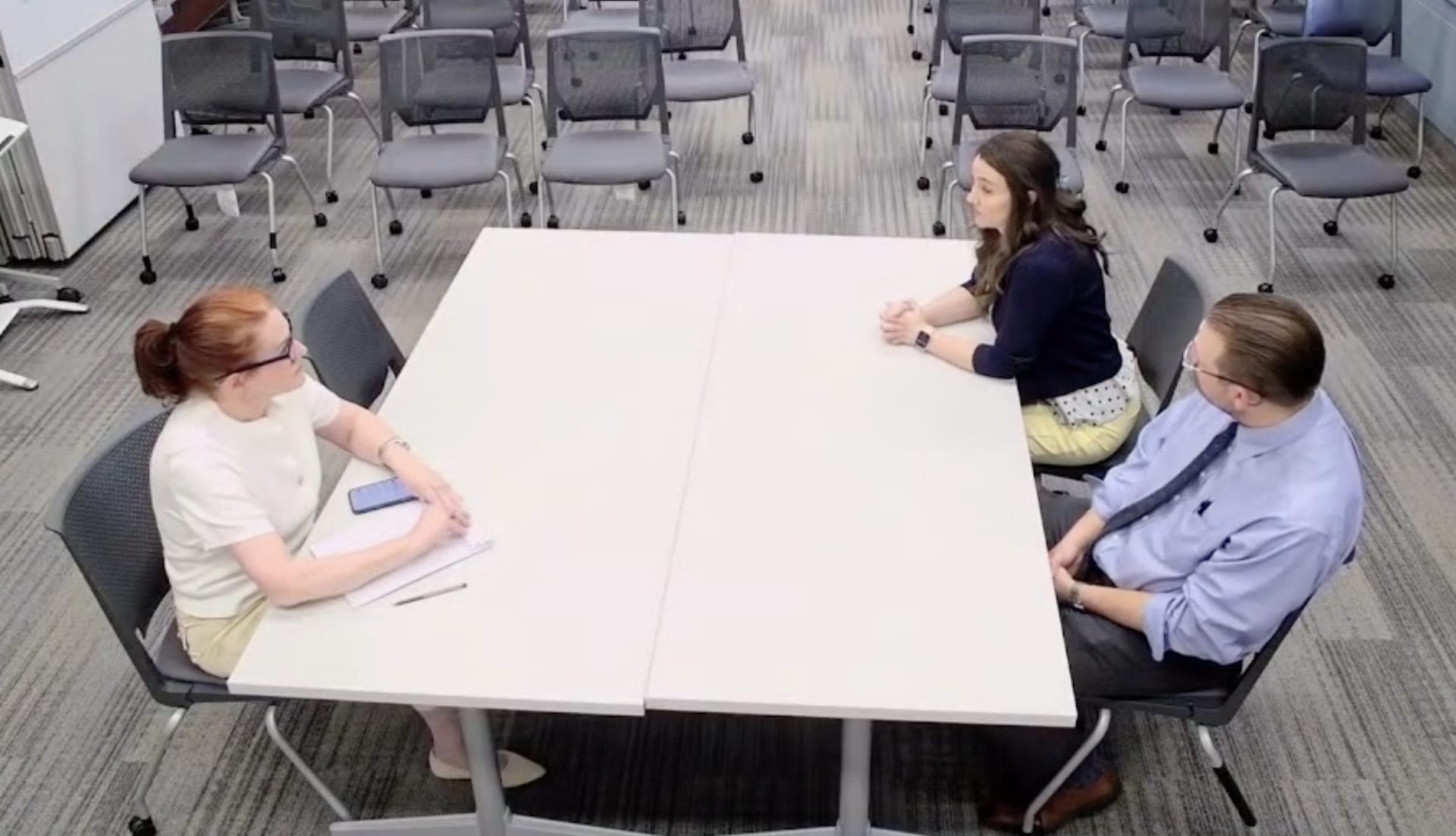
“That is such irresponsible spending,” Snarr said to White during mediation. “I’m asking for some responsible spending that gets us some votes.”
Principals distributed the money for all sorts of things, Stansbury told EdNews, and the union struggled to get an accurate accounting of how they are handed out to teachers.
“We tried to move some of that money around to do some other things for extracurricular and our Christmas bonuses, and that was something that they were not open to,” Stansbury said.
EdNews sent a public records request to the district for documentation on how the leadership stipends were dispersed for the 2025-26 school year. The district sent a list of the total stipends distributed to each school, but no records on how each school distributed the money to faculty.
Open or closed?
While negotiations are typically open to the public, with the exception of caucus meetings, mediation is less transparent to the public.
In the video of negotiations on May 15, the two parties frequently go into caucus to work on proposals and then come back out for open negotiations. But the video of meditation on June 4 is different.
Besides a few minutes at the beginning and end, there is just a 20-minute section around the 5.5 hour mark that is open. Those 20 minutes include negotiations between White and the two union reps.
When EdNews asked LaOrange about this 20-minute section, she said it was supposed to be open.
But Stansbury said the only parts of mediation that are supposed to be open are when the two parties are announcing their tentative agreements. She said the 20-minute portion was a “little bit of a hiccup,” and was not supposed to be live.
“That was a little bit of an oops,” Stansbury said. “And it was an oops that I think was in our favor.”
The section of video shows White bluntly telling the two union negotiators that there is no money. She said the district is down to one month of expenses in reserves, and the auditor wants three. If there is a hold back, she doesn’t know what position the district would be in.
“You literally have every dollar that they have authorized to be spent. They are not and cannot authorize — well I guess they could bargain in the red — but they’re not authorizing anymore because there is no more,” White said.
Snarr said he needs to get some votes, and focusing on the leadership stipends will not garner enough votes to cross the finish line.
“When you say there’s no increase to salary, and we cut your bonus, and we cut your class size aides and the coaches don’t get anymore, that’s not going to be a yes vote,” Snarr said. “I’m just going to throw it right back at you, I wish that would be a yes vote.”
In the end, the union ratified the agreement as is. Stansbury said she could not disclose the vote count, but she mentioned some of the comments that union members included in the Google form they use to collect votes.
“People were saying that they didn’t think anything better was coming. They were tired, they were feeling defeated,” Stansbury said. “They felt like nothing was going to change locally until things started changing at the state level.”
When asked about teacher morale, LaOrange said she can’t speak to that.
“I mean, I haven’t spoken to every teacher,” she said. “I haven’t asked that question.”