Idaho Democrats blast GOP for blocking Minority Report criticizing bill on trans students
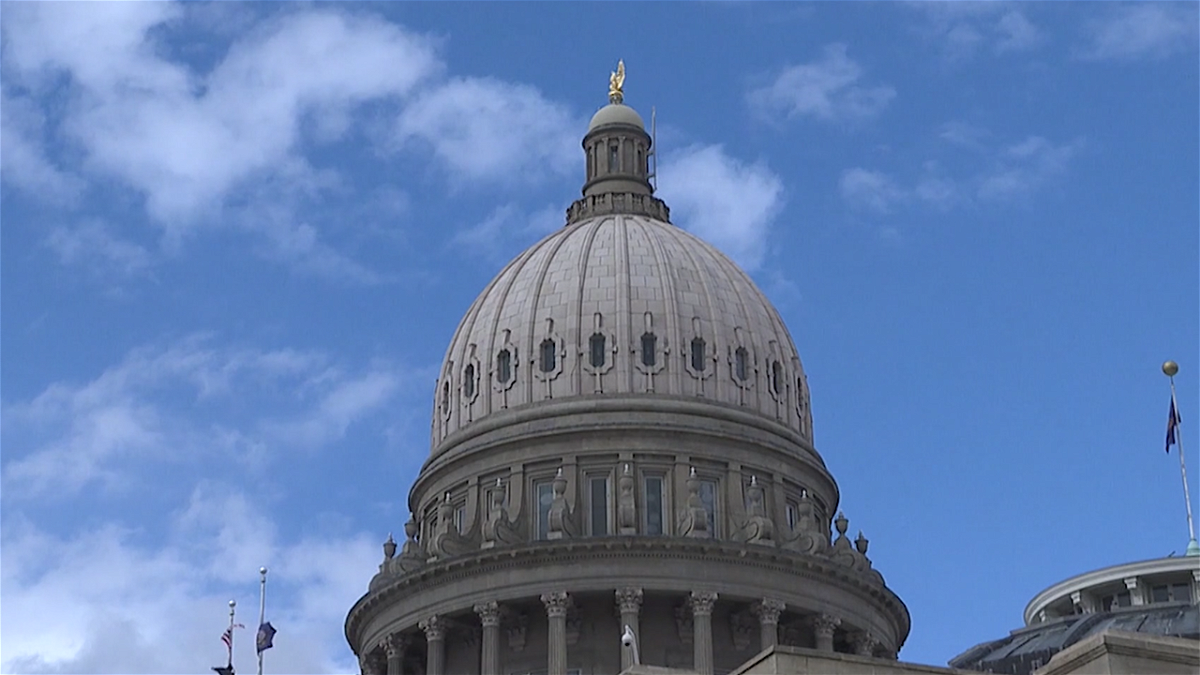

BOISE, Idaho (KIFI) — Idaho House Democrats are decrying what they call an 'egregious abuse of supermajority power' after the Republican supermajority voted to suspend House rules to block a formal minority report from being entered into the official House Journal.
The move followed the passage of House Bill 822, a measure aimed at ending "secretive transitions" in Idaho schools and healthcare settings.
A "Supermajority" Maneuver
Though HB 822 passed the House floor 59-9, the primary conflict erupted after the vote. Idaho House Minority Leader Rep. Ilana Rubel moved to submit a Minority Report to the House Journal—the official daily record of proceedings.
In a swift counter-maneuver, Rep. Jason Monks (R-Meridian) moved to suspend Rule 27, which would have allowed the report's inclusion. The House supported Monks’ motion in a 57-7 vote, effectively "censoring" the formal dissent from the record.
Rep. Rubel blasted the move as an egregious abuse of power.
“That report lays out exactly what they do not want on the record: that this bill invites constitutional challenge, imposes draconian penalties, and puts vulnerable children at risk," Rubel said following the vote. "If Republicans were confident in the merits of this bill, they would not be afraid of a report in the journal. That is not transparency. That is censorship."
Following the floor session, House Speaker Mike Moyle said the report took “personal stabs” and was “pushing inappropriate," according to a report by IdahoEdNews.
To read the full Minority Report on House Bill 822 here.
Understanding House Bill 822
Also known as the Pediatric Secretive Transitions Parental Rights Act, HB 822 would mandate that healthcare providers, schools, and childcare entities notify parents within three days of any request by a minor to "participate in or facilitate a social transition."
The bill would impose up to $100,000 civil penalties on schools or doctors that fail to notify parents when a student requests help in a “social transition.”
According to the bill's text, social transition is defined as "the process by which an individual goes from identifying with and living as a gender that corresponds to the individual's sex to identifying with and living as a gender different from the individual's sex and may involve social, legal, or physical changes, including adopting a name, pronouns, appearance, or dress that does not correspond to the individual's sex."
The bill’s sponsor, Rep. Bruce Skaug, argues the legislation is a parental rights issue.
"Hiding critical information for a child's well-being from parents is not in the child's best interest, nor does it allow for a holistic, well-rounded health decision," Rep. Skaug told lawmakers ahead of Wednesday's vote.
"It is the parents who know the child's health history throughout that child's life. A doctor or counselor only has a snapshot in time of that child's health policies that forced teachers and others to hide this information are certainly anti-family in the Idaho sense."
Testimony Cut Short in Committee
The floor debate followed a controversial committee hearing where acting chairman Rep. Joe Alfieri (R-Coeur d’Alene) cut off public testimony early after 14 minutes of limited debate. Democratic leadership noted that nearly three times as many people—including several Idaho Doctors—had signed up to testify against the bill as for it.
Opponents of the legislation argue that the bill violates the First Amendment rights of medical professionals by dictating how they communicate with patients.
In a statement released after Wednesday's vote, Taylor Munson of the ACLU of Idaho called the bill "dangerously vague, overbroad, and unconstitutional."
"Courts have repeatedly held that the First Amendment protects medical professionals when they provide information or referrals for patients," said Munson. "Make no mistake: this bill will jeopardize the safety and well-being of all Idaho kids, regardless of their gender identity. Any time we have a law that forces people to express themselves in rigid ways dictated by the government, everyone is at risk. It is not the government’s place to decide how we look, what we wear or how we express ourselves. "