Inside the tense GOP standoff over special ed funding bill


Originally posted on IdahoEdNews.org on May 14, 2026
IDAHO FALLS, Idaho — Late in the 2026 legislative session, a $5 million plan to support Idaho’s most vulnerable students hung in the balance.
A moderate Republican tried to rally support for the special education bill, reaching out to three of his local school leaders. But Rep. Ben Fuhriman’s email backfired — infuriating Rep. Barbara Ehardt, one of the House’s most influential conservatives.
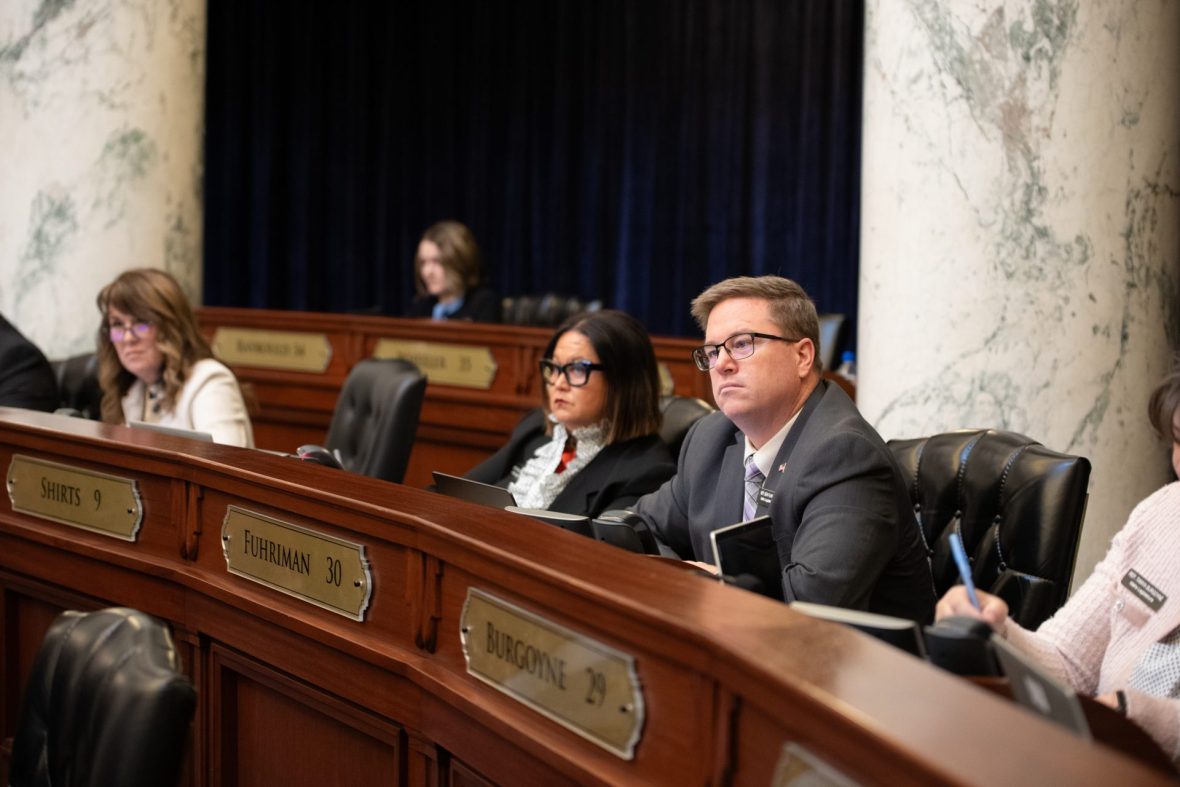
The email thread, thick with tension, jumped quickly as a brushfire. State superintendent Debbie Critchfield and House GOP leadership were soon looped in.
The special education bill did not go up in smoke, as Fuhriman feared it might. Senate Bill 1288 passed, and with Ehardt’s support. Beginning July 1, school districts and charters will be able to tap into the $5 million to cover the cost of serving high-needs special education students who need full-time staff assistance or expensive learning materials.
The emails — obtained by Idaho Education News, through a public records request — shed new light on the tensions within Idaho’s Republican supermajority. Tensions that define the debate over special education funding. Tensions that will play out in Tuesday’s GOP legislative primaries.
A cast of characters — and a GOP divided
The key figures in this debate represent the various factions within the Idaho GOP.
Fuhriman, R-Shelley, is a first-term lawmaker and a survivor of the closest race in the 2024 primary. Fuhriman defeated Blackfoot Republican Julianne Young, a prominent social conservative, by a scant four votes. Since then, Fuhriman has been at the forefront of the special education issue. He carried an unsuccessful high-needs bill in 2025. Earlier this year, he co-sponsored a nonbinding memorial urging the feds to increase special education spending.
Fuhriman and Young will square off again in Tuesday’s primary.
Ehardt, R-Idaho Falls, is a fifth-term lawmaker who falls squarely into the House’s social conservative camp. In 2020, she co-sponsored Idaho’s first-in-the-nation legislation banning transgender athletes from competing in women’s and girls’ sports — a law now before the United States Supreme Court. She faces a primary challenger next week, Connor Cook, who says Idaho has “gone rogue,” losing sight of common sense.
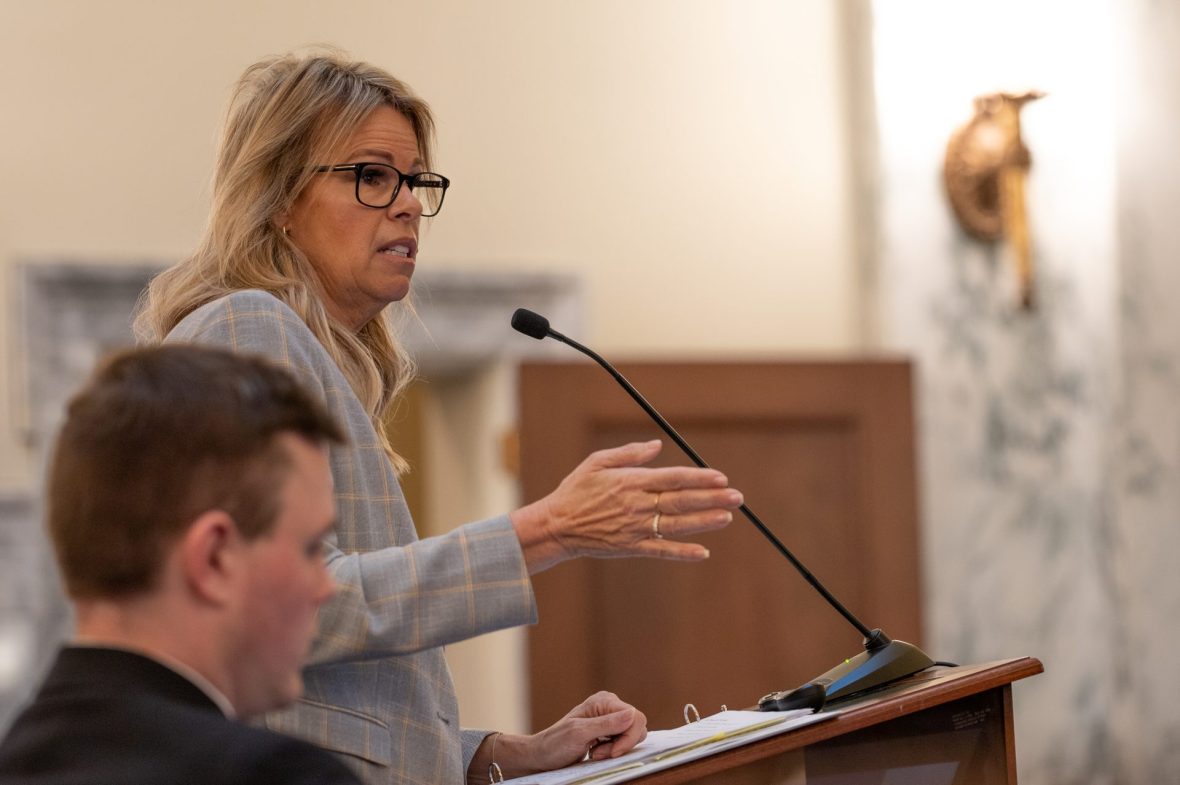
Unlike Fuhriman and Ehardt, Critchfield is unopposed in the GOP primary. But Critchfield overcame stiff resistance — all from her own party — as she secured support for the breakthrough high-needs program. While legislative co-sponsors would come and go through the session, one thing was constant; the high-needs program was Critchfield’s top priority for the 2026 session. The bill passed with comfortable bipartisan majorities, but 33 Republicans still voted against it.
One of those 33 lawmakers was Rep. Dale Hawkins, R-Fernwood. One of the House’s hardline conservatives, Hawkins says the high-needs program puts public education in a role better served by health and welfare agencies. The first-year chairman of House Education Committee gave the high-needs bill a committee hearing on the morning of March 20, hours after the Fuhriman-Ehardt email exchange.
‘I am so mad. ... This is not how we do business’
The Senate had already passed the high-needs bill, but the House Education hearing was pivotal. The email blitz unfolded over four hours on March 19 — the afternoon before the hearing.
12:20 p.m.: Fuhriman received an unsigned note from the House Education email account, saying he is on the March 20 agenda to present the high-needs bill.
1:06 p.m.: Fuhriman urged three Eastern Idaho superintendents — Jeff Gee of Ririe, Douglas McLaren of Shelley and Basil Morris of Firth — to make a last-minute and targeted push for high-needs funding. Fuhriman’s appeal focused on just one lawmaker: Ehardt, who had opposed the 2025 version of the bill.
“Barb is a swing vote,” Fuhriman wrote. “With it being an election year and her having a legitimate opponent, she’s approaching things a little differently this session. Regardless of the dynamics, we really need her vote to move this bill out of committee.”
None of the superintendents emailed Ehardt. But Ehardt also received Fuhriman’s email — and moved quickly.
1:33 p.m.: “I have not sent a response yet. But I am so mad that I am considering what I will do,” Ehardt said in an email to Hawkins. “I’m disturbed by the comment that I am approaching things differently due to an election year … I have not approached anything differently. Very disturbing. This is not how we do business.”

2:38 p.m.: Fuhriman received another email from House Education, saying his high-needs presentation “has been canceled.”
2:47 p.m.: House Education emailed Rep. Ron Mendive, R-Coeur d’Alene, and said he is scheduled to present on the high-needs bill.
3:34 p.m.: Ehardt replied to Fuhriman and the superintendents. “This email is very inappropriate. If this is how business is conducted, then I will not be a part of it.”
Ehardt decided to add the four members of House GOP leadership to the thread. “If this is how we’re going to act, they’re going to be repercussions,” Ehardt told EdNews in an interview this week.
Ehardt also looped in Critchfield and Brennan Summers, Critchfield’s chief governmental affairs officer, and point person on the high-needs bill. Ehardt directed much of her email to them. “I thought our discussions, to this point, had been productive in an effort to advance this. I appreciated your efforts to move money around and find a way to make it happen. Maybe I was mistaken.”
3:51 p.m.: Moving quickly into damage control, Critchfield emailed Ehardt and the entire group. “I can and will vouch that we have been talking and working with you in good faith. … I’d love to visit with you and I’ll come find you!”
3:54 p.m.: Ehardt forwarded the entire thread to another key legislator: Rep. Josh Tanner, R-Eagle. As co-chair of the Joint Finance-Appropriations Committee, Tanner plays a pivotal role in funding, or not funding, initiatives such as the high-needs program.
How we got the emails
To better understand the debate over the special education high-needs bill, Idaho Education News filed a public records request for emails to and from several key legislators — including Rep. Dale Hawkins, R-Fernwood, chair of the House Education Committee; Rep. Josh Tanner, R-Eagle, co-chair of the Joint Finance-Appropriations Committee; and Rep. Ben Fuhriman, R-Shelley. EdNews filed its request on April 20. The Legislative Services Office supplied the emails on May 4, the 10-day deadline, under state public records law. LSO did not charge EdNews for the emails.‘It was a boneheaded stupid mistake’
Fuhriman didn’t intend to send his email to Ehardt. As he wrote to the school superintendents, Fuhriman wanted to doublecheck the spelling of Ehardt’s name. He typed Ehardt’s initials alongside the superintendents’ names, knowing her full name would automatically pop up in his email address book.
Then he pressed “send,” inadvertently delivering the email to Ehardt as well as the superintendents.
“It was a boneheaded stupid mistake that I made,” Fuhriman said this week.
He was on the House floor when he saw Ehardt’s reply. Mortified, he asked Summers, Critchfield’s aide, for advice about what to do next. Fuhriman decided to apologize, and went to Ehardt’s desk when the House went into recess. “I just stared at her and nodded and let her have her little moment, and I just took my whipping,” Fuhriman told EdNews.
In an EdNews interview this week, Ehardt didn’t walk back her reaction. “I thought that was pretty gosh darn low, manipulative, I could go on.” But she also told Fuhriman that she would drop the matter.
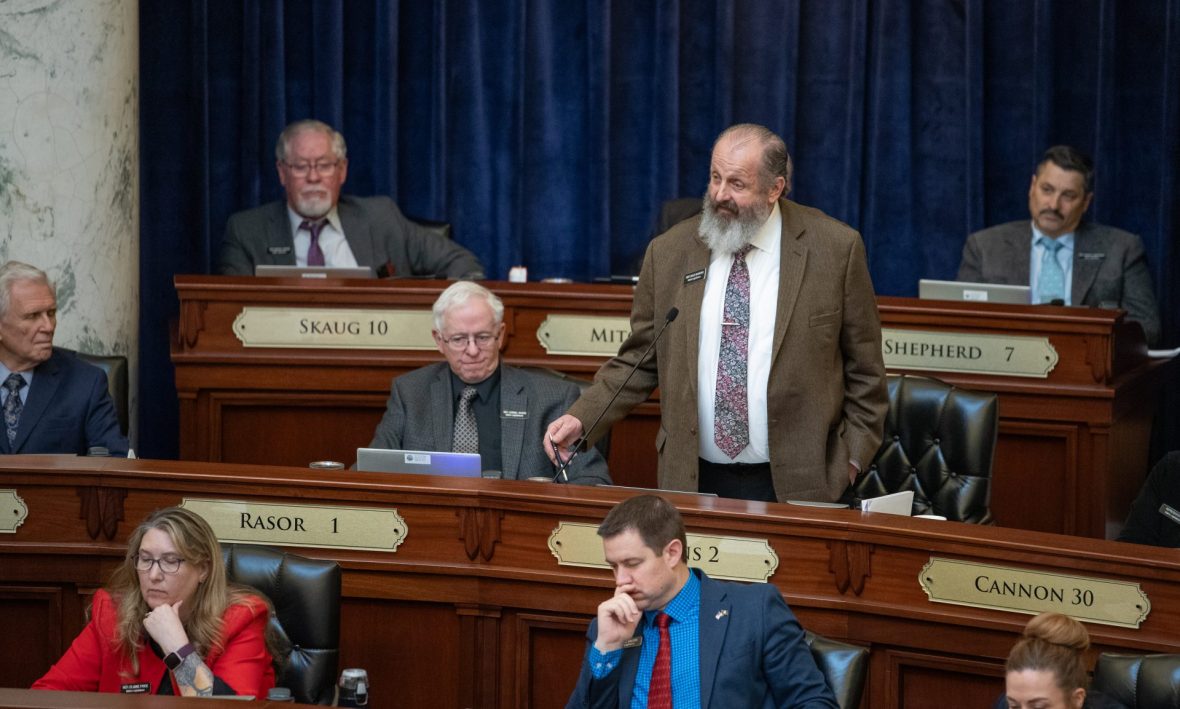
Hawkins overheard the exchange on the House floor.
“He walked past me, stopped, got right in my face, swore at me, and then told me, if it was up to him … that bill would never see the light of day,” Fuhriman said.
Hawkins has a different version.
“The only thing I can tell you is I don’t curse at anyone,” he said in a written response to EdNews Wednesday. “I did tell him his manipulation against Rep. Ehardt was uncalled for. She was already for the bill.”
The committee hearing: the calm after the storm
House Education’s March 19 emails to Fuhriman and Mendive suggests Fuhriman was yanked off the committee’s agenda abruptly, and right after his dustup with Ehardt.
In his message to EdNews, Hawkins didn’t respond to a question about the timing. But Fuhriman said he had pulled his name from the high-needs bill long before March 19, and never expected to be on the committee’s agenda.

But Mendive was on the agenda, in a clear attempt to broaden the base of support. Fuhriman and Mendive are far apart on ideology. Mendive, a seven-term legislative veteran, is aligned with the House’s conservative wing — and with lawmakers like Ehardt and Hawkins.
And after the behind-the-scenes bickering on March 19, the March 20 committee hearing was a breeze.
Ehardt praised Critchfield for finding the $5 million within her department, proposing one-time transfers to start the program. “We want our departments to use their money wisely, instead of continually asking for more money.”
Hardline opponents — and even Hawkins — agreed to send the bill to the House floor for a final vote. It came out of committee on a unanimous voice vote.
The House passed the bill on March 24. Gov. Brad Little signed it into law a week later.
What happens next? The elections will make a difference
The future of the high-needs program will rest with the 2027 Legislature. Because Critchfield used one-time money for this year’s startup, lawmakers will have to decide whether to keep the program going — and how much to spend on it.
In other words, the future of the high-needs bill is intertwined with the 2026 legislative elections, especially the GOP primaries. Across the state, mainstream Republicans and hardliners will square off. Collectively, these outcomes will determine the ideological core of the Legislature’s Republican caucuses. They will, in turn, decide the makeup of the GOP’s leadership teams, and the makeup of the committees that write budgets and set education policy.
In Eastern Idaho, in legislative districts just a few miles apart, Ehardt and Fuhriman are embroiled in two such races.
Ehardt is being challenged from the center. Her opponent, Cook, secured the Idaho Education Association’s endorsement Wednesday.
Fuhriman is being challenged from the right. Twenty-four months removed from a race decided by a quartet of votes, the Fuhriman-Young rematch will be one of the most closely watched races of Election Night.
Ehardt will be watching. She considers Young a friend. When they served together in the House, they were solidly in sync on social issues.
But Ehardt says she has kept her word to Fuhriman, and has never told Young about the high-needs scuffle.
“I never want to be that person,” she said.
Kevin Richert writes a weekly analysis on education policy and education politics. Look for his stories each Thursday.