Breaking the Cycle: I.G.N.I.T.E. changing lives in the Bonneville County Jail

IDAHO FALLS, Idaho (KIFI) – Inside the walls of the Bonneville County Jail, a transformational program is lifting lives and offering hope.
In the past three years, 106 individuals have earned their GED, coming out of jail better prepared for life than when they went in.
These graduates are participants in I.G.N.I.T.E., a program that is changing corrections and breaking the cycle of re-arrests.
"I started using drugs about ten years ago... after some trauma when my father passed away. I caught my second felony earlier this year," said Abbigail McKinney.
But for McKinney, this step back is turning into a leap forward. Less than five months after entering jail, she enrolled in the I.G.N.I.T.E. program, graduated with her GED and is now back in the community.
For her, drug use was a symptom of a broken childhood.
After growing up in foster care and being rejected from numerous homes, she found herself trapped in a cycle that landed her in jail.
Nationally, over two-thirds of inmates are re-arrested within three years – men and women like Frank Addleman, who are doing everything in their power to break that cycle.
“When I was released this last time, there was no way in the world that you could convince me or tell me that I would ever have handcuffs on again," Addleman said. "I thought I had everything under control, and I paroled out. I had a good job with good people that gave me every opportunity and got smacked right in the face with life on life's terms."
The problem often isn't just lack of willpower; for former inmates looking for stability, finding housing and employment outside the jail are major obstacles.
“If you get released on a Friday night at 5:00 and you have nothing to go out to in the community, ... you go back to what you know," said Lt. Brian Johnson, the I.G.N.I.T.E. Program Director. "That's going to the dope house and staying on couches and wherever you can... just to make life happen so you don't end up dead on the street.”
Without housing or a pipeline to job opportunities, some feel they’re set up to fail.
Addressing that cycle of re-arrests requires building the foundation before an inmate ever walks out the door.
In Bonneville County, officials are working to break that pattern through the I.G.N.I.T.E. program.
“Our system is broken, you know, and the I.G.N.I.T.E. program is something that I've never experienced before,” Addleman said.
I.G.N.I.T.E. stands for Inmate Growth Naturally and Intentionally Through Education.
Participants study two hours a day, working toward their GED, learning trades, or taking classes like financial management.
Current I.G.N.I.T.E. class members include Aloha Beard, Machenzie Bigler, Kierstin Morgan, Johathan Sloan, Brian Hollist, Jordan Hughes, Daniel Bartell, Jeffery Williams, Cameron Wiley and Neil Sanchez.
For Abbigail, it has changed how she views herself and her future.
“The team here is beyond just a team. They make you feel like you're family," she said. "They truly care about your well-being, your mental health, your addiction, what happened in the past, what's going to happen in the future."
While the program doesn't remove all obstacles, Sheriff Sam Hulse says it is changing the way inmates look at staff and at themselves.
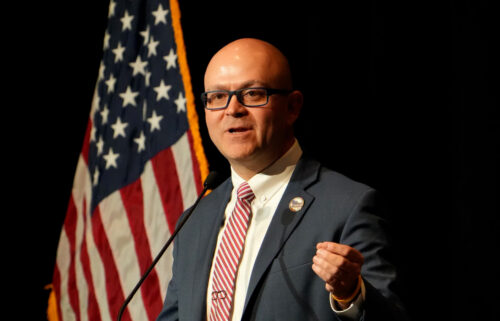
“What do we see? When we see people, which is so important," Hulse said. "We have to see one another first as people, and then we can begin to make those changes as individuals going forward.”
Reducing recidivism is a two-part equation: preparing inmates for the real world while they’re inside, and ensuring the community is ready to receive them when they return.
More than 90 percent of people in Bonneville County Jail are released into the community in 90 days.
Programs like I.G.N.I.T.E. offer a vital first step, but lasting change requires continued help beyond the jail walls.
“I wouldn't be where I am today without them. These guys want the absolute best for every person who comes into this jail and through this program," McKinney said. "It shows, and I'm just so grateful to be a part of it."
Bonneville County Sheriff's Office reports the program is succeeding, with a "significant reduction" in individuals returning to jail after completing I.G.N.I.T.E.
Today, 39 jails have adopted the I.G.N.I.T.E. program, out of 3,300 counties nationwide, meaning this spark of an educational revolution is just starting to catch fire.