Do you want to be like Mike? A look at Michael Jordan’s Gulfstream fleet

juanpabloms // Shutterstock
Most people look at Michael Jordan’s jets and see a high-end brand. But behind the signature “Jumpman” paint jobs, Jordan’s flight department runs on a cold, disciplined asset management strategy. In the world of high-stakes aviation, global mobility has stopped being about prestige. It’s now about pinning down predictable operating economics and maximizing range.
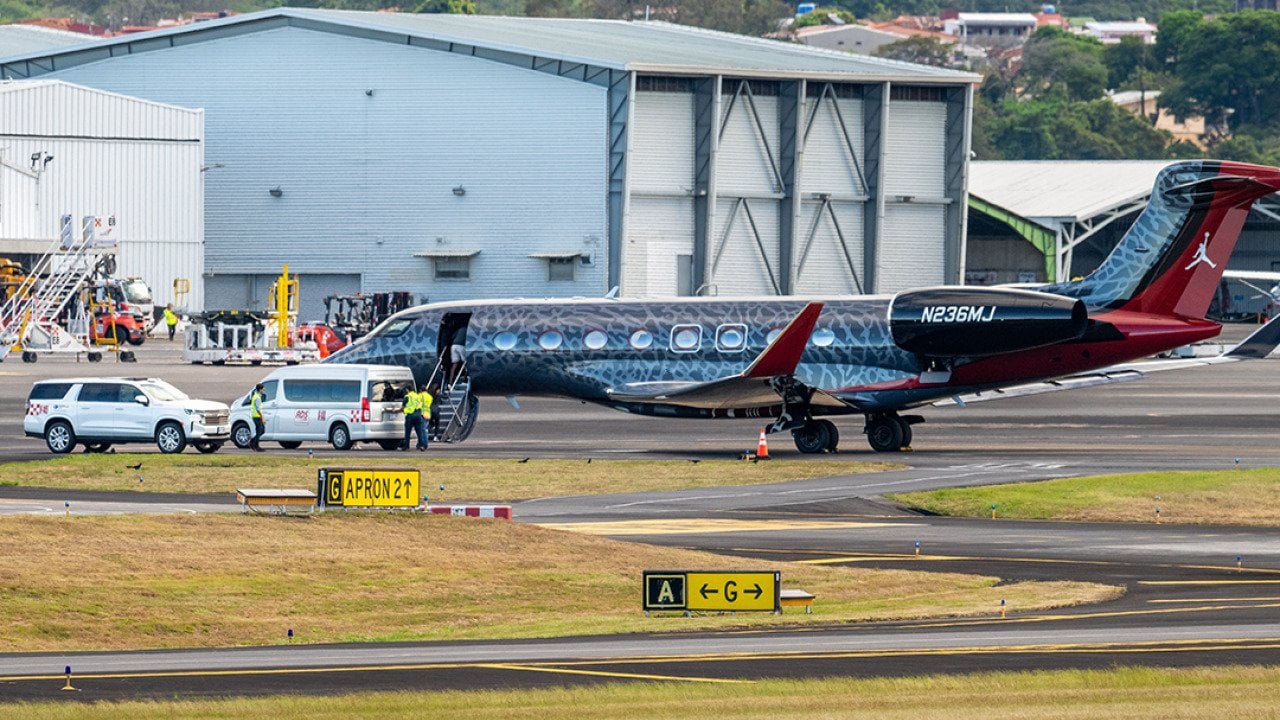
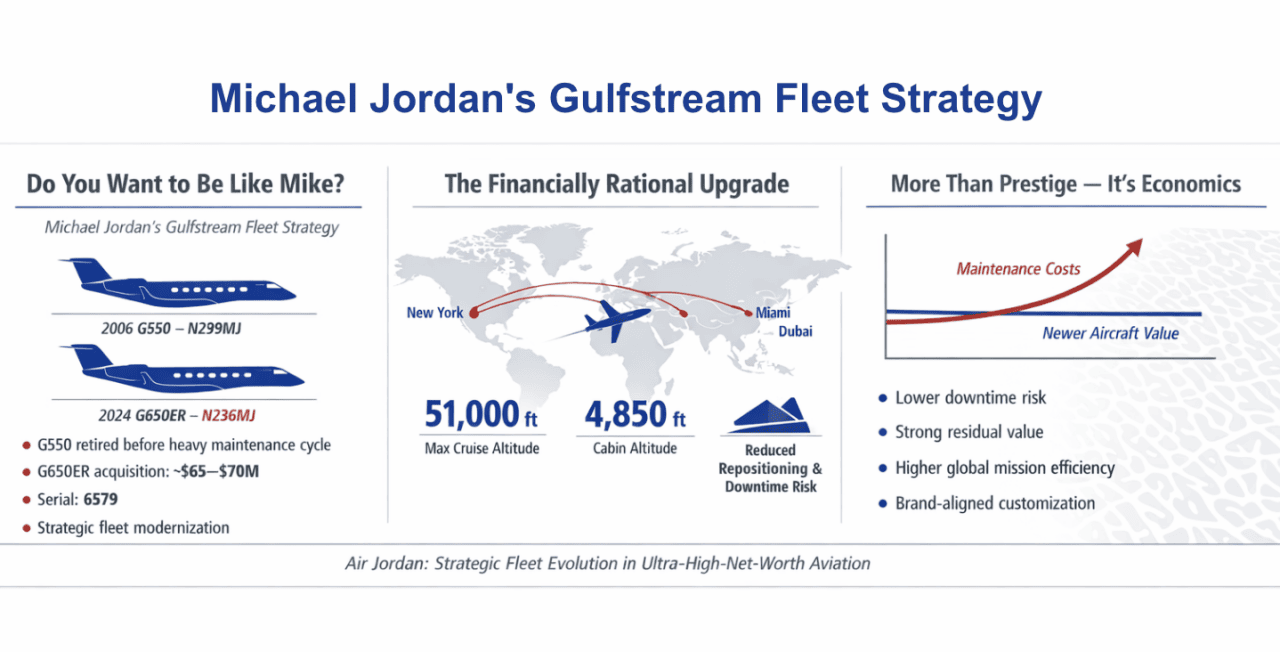
The FAA registry and reporting from Simple Flying recently caught a major tail number swap in late 2024. Jordan moved into a state-of-the-art Gulfstream G650ER (N236MJ, serial number 6579), shelving his 2006 G550 in the process. This wasn’t an upgrade for the sake of a new toy. It was a calculated move to sunset an aging airframe before it hit a multimillion-dollar heavy maintenance wall.
It was essentially a math problem. Jettly, a private jet charter broker, looks at how by ditching legacy hardware for modern performance, Jordan’s “MJ Air” team solved a headache every corporate flight department eventually faces: the exact moment a plane becomes a liability rather than a tool. For anyone managing a seven-figure travel budget, this is about smart capital. It’s about ensuring an aircraft can actually sustain a global schedule without the constant downtime risks that come with an aging fleet.
Jettly
Why the G650ER Represents a Financially Rational Upgrade
The Gulfstream G550 was a proven industry workhorse for nearly two decades, but the technological floor of the market has shifted. Long-range operational requirements and fuel-burn efficiencies now favor newer platforms like the G650ER.
Its extended range enables it to connect cities such as New York to Hong Kong or Miami to Dubai without refueling, which significantly reduces repositioning costs and crew idle hours. For travelers conducting high-frequency transoceanic missions, range directly translates into utilization efficiency.
Business Insider estimates the G650ER acquisition range at roughly $65-$70 million, depending on specifications and year of manufacture. While the capital requirement is substantial, its economic justification lies in reduced flight time, lower operating hours per mission, and enhanced residual value relative to aging legacy platforms.
The G650ER remains one of the most in-demand business jets globally, which cushions depreciation compared to older large‑cabin models.
How Jordan’s Former G550 Fits Into His Fleet
Jordan’s previous primary jet, the G550 registered as N239MJ, served his business operations reliably for years. However, even the most legendary airframes eventually face the challenge of maintenance variability. Shifting from a G550 to a G650ER is a textbook move for ultra-high-net-worth (UHNW) travelers looking to reduce exposure to aging-aircraft downtime.
As an airframe ages, the frequency of scheduled and unscheduled maintenance events inevitably increases. For a traveler with a high-frequency international schedule, a “grounded” aircraft represents a massive mission failure.
By moving up to a newer model like the G650ER before these lifecycle costs begin to accelerate, Jordan is essentially hedging against the rising cost of parts and specialized labor. This logic mirrors the fleet strategies used by the most efficient corporate flight departments across North America and Europe.
Customization as a Strategic Asset
Where Michael Jordan distinguishes himself is in the aircraft’s bespoke design. Media outlets like Yahoo News have frequently highlighted the striking exterior, which features a silver-and-black elephant-print livery inspired by the Air Jordan 3.
This isn’t just a high-gloss finish; reporting indicates the custom paint job alone cost an estimated $500,000. While these aesthetic choices are often viewed as purely personal, they signal a broader trend in UHNW aviation toward brand-aligned personalization. For a public figure, the tail number N236MJ acts as a flying resume—incorporating his jersey number (23) and his six championship rings.
Inside, the G650ER platform offers a massive cabin with up to four distinct living zones. While specific interior selections for Jordan’s aircraft remain private, the G650ER typically supports modular layouts for dining, collaborative work, and overnight rest.
From an operational standpoint, the jet’s value as a productivity tool lies in its environmental controls. The G650ER maintains a cabin altitude of 4,850 feet even while cruising at 51,000 feet, which, combined with a fresh-air replenishment system that cycles every two minutes, reduces physical strain on longer flights.
Understanding the Economics Behind Jordan’s Fleet Evolution
Jordan’s name may dominate the headlines, but his fleet decisions reflect the market realities that many UHNW and corporate travelers face. Large‑cabin demand has tightened worldwide, and long‑range platforms continue to command higher residual values due to their mission flexibility. The economics justify moving into newer models sooner, but typically only for owners flying substantial intercontinental hours.
Additionally, the G650ER’s performance profile aligns with global routing patterns that demand fewer technical stops, reduced crew days, and improved scheduling reliability. These are quantifiable operational advantages applicable in any corporate context and relevant to celebrity lifestyles, creating an interesting overlap.
What Jordan’s Fleet Says About the Future of UHNW Aviation
Michael Jordan’s fleet evolution mirrors a broader reconfiguration of the private aviation market. Ultra-wealthy travelers are increasingly prioritizing global reach, reliability, and residual value over mere ownership prestige.
Newer long‑range platforms offer a strategic advantage in an environment where maintenance downtime has become a volatile planning variable. Gulfstream’s G650ER remains a benchmark for connecting major financial and sports markets without delay, which explains its adoption among business, political, and sports figures.
As long‑range platforms continue to advance, and as environmental pressures shape fleet modernization, owners may increasingly mirror Jordan’s behavior by retiring aging legacy aircraft in favor of more efficient, longer‑range models that preserve value while expanding mission capability. Jordan’s fleet is a reflection of strategic asset management that may serve as a predictive indicator of where the industry is moving in the next decade.
This story was produced by Jettly and reviewed and distributed by Stacker.

