Idaho House passes bill to nullify local LGBTQ+ protections
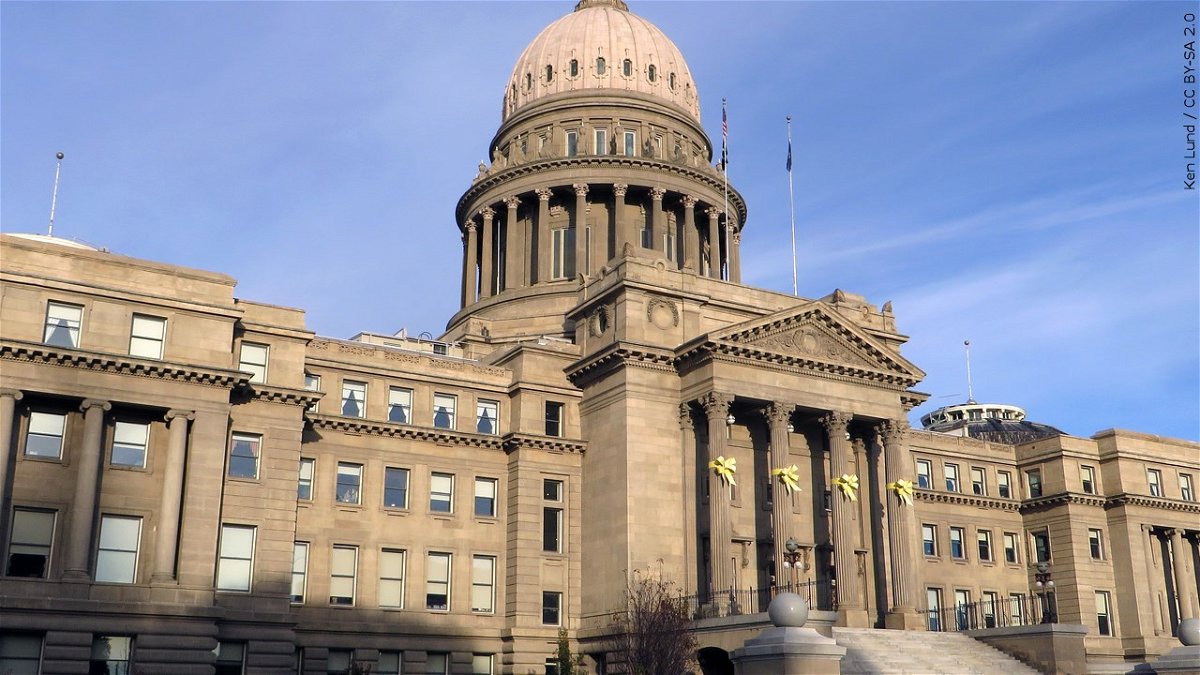

BOISE, Idaho (KIFI) — The Idaho House of Representatives approved legislation Thursday that would strip 13 cities of their ability to enforce local anti-discrimination ordinances protecting LGBTQ+ residents. House Bill 557, titled the "Uniformity in Local Antidiscrimination Ordinances Act," passed in a 53-16 vote and now heads to the State Senate for consideration.
If passed, the bill would prohibit cities and counties from enforcing civil rights protections that exceed those recognized under state law. Because Idaho’s state-level Human Rights Act does not currently include sexual orientation or gender identity as protected classes, the move would effectively nullify existing local protections across the state.
RELATED: Idaho Bill seeks to nullify local LGBTQ+ anti-discrimination ordinances
Religious Freedom vs. Public Accommodations
The bill, sponsored by Rep. Bruce Skaug (R-Nampa) and drafted by the conservative Idaho Family Policy Center, was framed by supporters as a necessary shield for religious liberty and local business owners.
In debate, Representative Barbra Ehardt (R-Idaho Falls) reflected on her time running for the Idaho Falls City Council in 2013, as the City first passed a non-discrimination ordinance protecting against LGBTQ+ discrimination. She argued that while original advocates for these ordinances focused on housing and employment, the real goal was forcing business owners to violate their beliefs in the public sphere.
"As it was being pushed forward, everybody pushing it only addressed employment and housing because they wanted us to believe that somehow those of our friends who are LGBT would be kicked out of their housing or removed from their employment," said Ehardt. "What they really wanted was public accommodations."
Public accommodation laws ensure that businesses providing goods or services to the general public—such as restaurants, hotels, and retail shops—must provide equal access regardless of disability, race, color, religion, or national origin.
In the case of LGBTQ+ protections, public accommodations laws became the central issue in the 2018 U.S. Supreme Court case involving Colorado’s Masterpiece Cakeshop, where a baker refused to create a wedding cake for a same-sex couple. The Supreme Court found that Colorado Anti-Discrimination Act violated the store owner’s constitutional rights.
Ehardt's arguments echo statements by the Idaho Family Policy Center, arguing that such ordinances are frequently weaponized against small business owners who don’t want to participate in events that violate their sincerely held religious beliefs.
"That's what public accommodation does. It raises rights that I would say are not there to usurp a person's deeply held religious beliefs," Ehardt told lawmakers.
Perceived Hostility to the LGBTQ+ Community
Opponents warned that the bill sends a damaging message to those outside the state. House Democratic Rep. Ilana Rubel argued that her contacts in the business world have struggled to recruit top talent to the state because of perceived hostility to the LGBTQ community.
"One of the things that gives them that comfort is that we have these municipal nondiscrimination ordinances. This is actually extremely helpful to our business community in being able to recruit and retain top talent," Rubel told lawmakers. "Stripping these protections away at the municipal level will send a very hostile message."
Debate over Local Control
All nine house democrats and a handful of republicans opposed the bill. Dissenting House Republicans expressed concerns over a perceived overreach of state power. Rep. Mark Sauter, R-Sandpoint, argued that "local control is a pillar of our state."
"It just feels like this bill is really using a sledgehammer to kill a fly. And honestly, I don't feel like we need to have a belt and suspenders," Sauter told lawmakers.
According to reports by the Idaho Capital Sun, Sandpoint repealed its own anti-discrimination ordinance in November after complaints about a transgender woman allegedly using the women’s facilities at the local YMCA. He noted the city recently managed the difficult choice through community hearings and a council vote.
"We have local control. Sandpoint showed that it worked," stated Sauter.
Rep. Skaug defended the measure by stating that local governments only hold the authority delegated to them by the state. He argued that the Idaho Legislature has already established a comprehensive framework and that local governments "should not independently meddle with that framework."
State Democrat, Rep. Monica Church, called the argument for the supreme authority of the state by state Republicans, a "Fever Dream."
"If we are truly worried that Idaho would fall prey to the urban majority rule, as many of our neighboring states have done, this is literally the worst thing that we could do," said Church. "Removing local power. This kind of law makes statists and communists salivate."