Survey: 60% of parents have school-related debt, and most are planning to add more this fall


For most families, back-to-school shopping isn’t a short-term, seasonal expense that ends when the school year begins. New data shows most parents borrow money to cover school costs year-round, and few are paying it off before taking on new school-related debt.
In a May 2026 survey of over 1,000 parents of K-12 students, 89% said they feel financial pressure from school costs, and 39% said that pressure peaks before school even starts, during summer shopping. Accredited Debt Relief takes a look at where that debt comes from and how long it takes to pay down, along with the trade-offs families make to keep up.
Key Takeaways
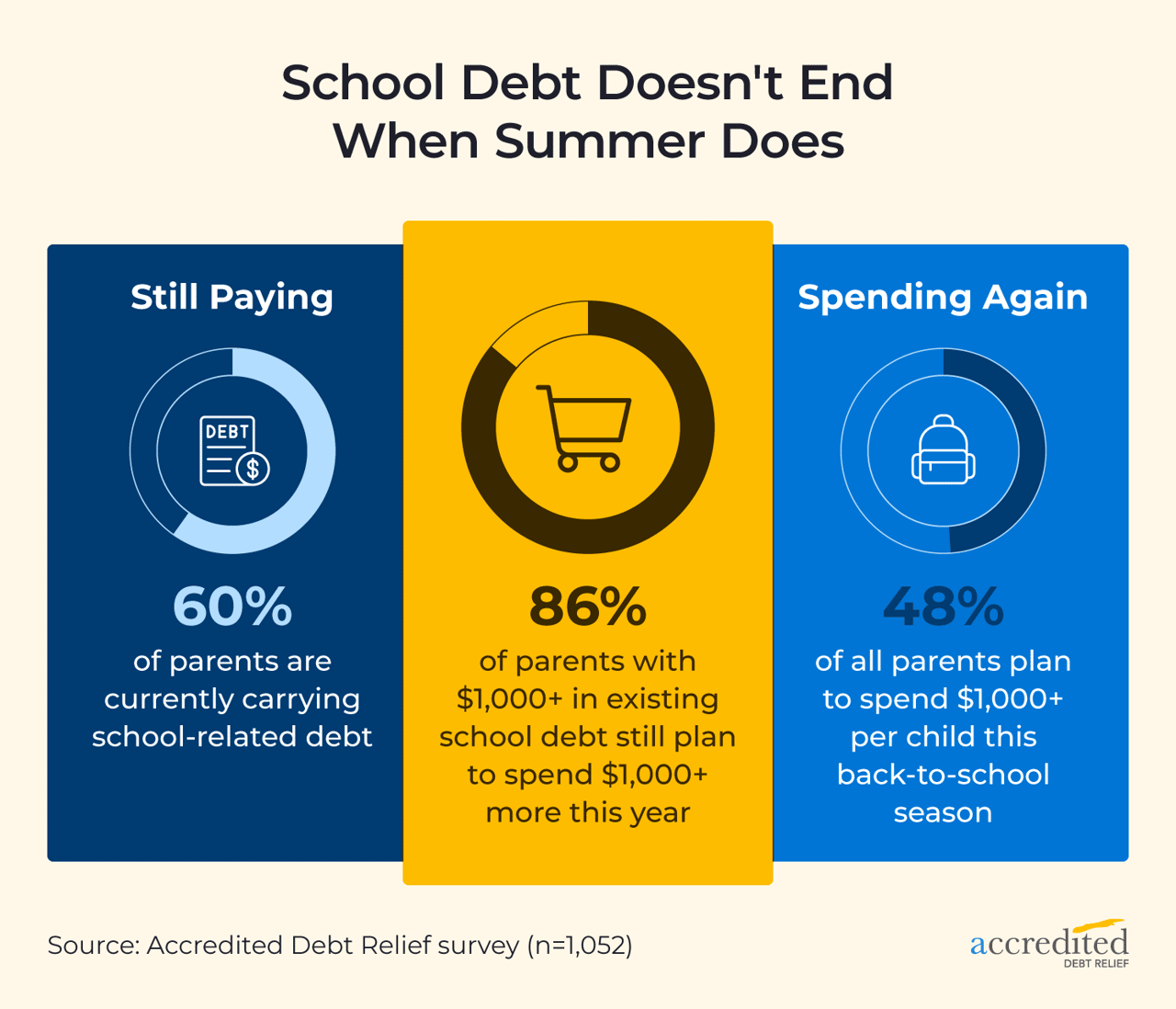
- Sixty percent of parents are currently carrying school-related debt, and 27% already owe $1,000 or more before this fall’s spending begins.
- Among parents carrying $1,000-plus in school debt, 86% still plan to spend at least $1,000 per child this fall.
- Fifty-three percent of parents rely on financing more now than they did three years ago.
- More than half (54%) of parents surveyed are still paying off back-to-school expenses by the time the holiday shopping season begins.
More Than 50% of Parents Are Borrowing More for School Now Than They Were Three Years Ago
Parents are seeking financing to cover school costs more often than in past years. Fifty-three percent of parents say they rely on financing more now than they did three years ago, with 26% saying they rely on it significantly more. That intensifies among parents already carrying $1,000 or more in school-related debt, with 75% saying their reliance on financing has grown, according to the Accredited Debt Relief survey.
The payment methods reveal where that borrowing lives.
- 32% carry a credit card balance for school expenses.
- 22% use buy now, pay later (BNPL) services like Afterpay or Klarna.
- 13% turn to a cash advance.
A majority (64%) use debit or cash, but plenty of parents use more than one method in the same season, which is part of why the total obligation is hard to see.
This affects many parents, regardless of income. Among parents earning $80,000 or more, 60% carry an active school-related debt balance. The numbers back the pressure parents are feeling. According to the National Retail Federation, back-to-school shoppers were expected to spend $858 on average in 2025, and total K-12 spending is up $600 million since 2024. School just costs more and covers more than it used to.
With more families financing school costs through credit cards, BNPL and loans, how long those balances stick around matters as much as how large they are.
60% of Parents Are Still Paying off School Debt Months After the School Year Begins
Paying off school debt quickly is the exception, with only 23% of parents clearing their school-related charges in the same month. Among those who finance school costs, nearly two-thirds (60%) pay over time, stretching anywhere from one month to more than 12 months, with interest accruing the longer it takes.
When it takes more than a month or two to pay off school debt, parents often need to manage both existing debt payments and new school-related spending. This means parents have no reset; the school year is one continuous stretch of spending.
More than half of parents (54%) are still paying off school debt when the holiday shopping season begins, and 25% say they pay off back-to-school expenses through the holidays most years.
The pressure of school costs also shows up early: 39% feel it most before school even starts, and another 22% feel it in the first month.
Paying back debt over time can already be stressful, but paying only the minimum can prolong stress. If someone makes minimum payments on their debt balance, they may struggle to make any actual progress on paying off their debt.
Most Parents in School Debt Plan to Spend $1,000-plus More This Fall, and Most Are Confident They Can Cover It
Nearly half (48%) of parents plan to spend $1,000 or more per child, and another 28% expect to spend $500-$999.
The 60% already carrying school-related debt will be paying their new balance, too. Among parents who are already carrying $1,000 or more in school debt, 86% still plan to spend at least another $1,000 per child this year.
Part of the reason why parents are taking on more debt is because 68% of parents with over $1,000 in debt say they’re confident they can cover this year’s costs without going into more debt or falling behind on other bills.
This disconnect is often called optimism bias. According to research from the Federal Reserve Bank of Philadelphia, households that are overly optimistic about their future income carry higher debt loads and are less likely than more “realistic” households to adjust their spending to fit their current income.
Clothing and shoes put financial strain on households more often than any other school expense, named by 37% of parents as one of their two most burdensome expenses, with electronics next at 25%.
But among parents earning under $40,000, the essentials like supplies, clothing and transportation dominate the list of top stressors.
Making more money isn’t a guarantee that parents will pay cash for school expenses. In households making $80,000 or more, 34% still carry $1,000 or more in school-related debt. A bigger paycheck tends to expand what families buy, not reduce what they owe — and the debt accumulates either way.
From Minimum Payments to Skipped Groceries, School Costs Reshape the Whole Budget
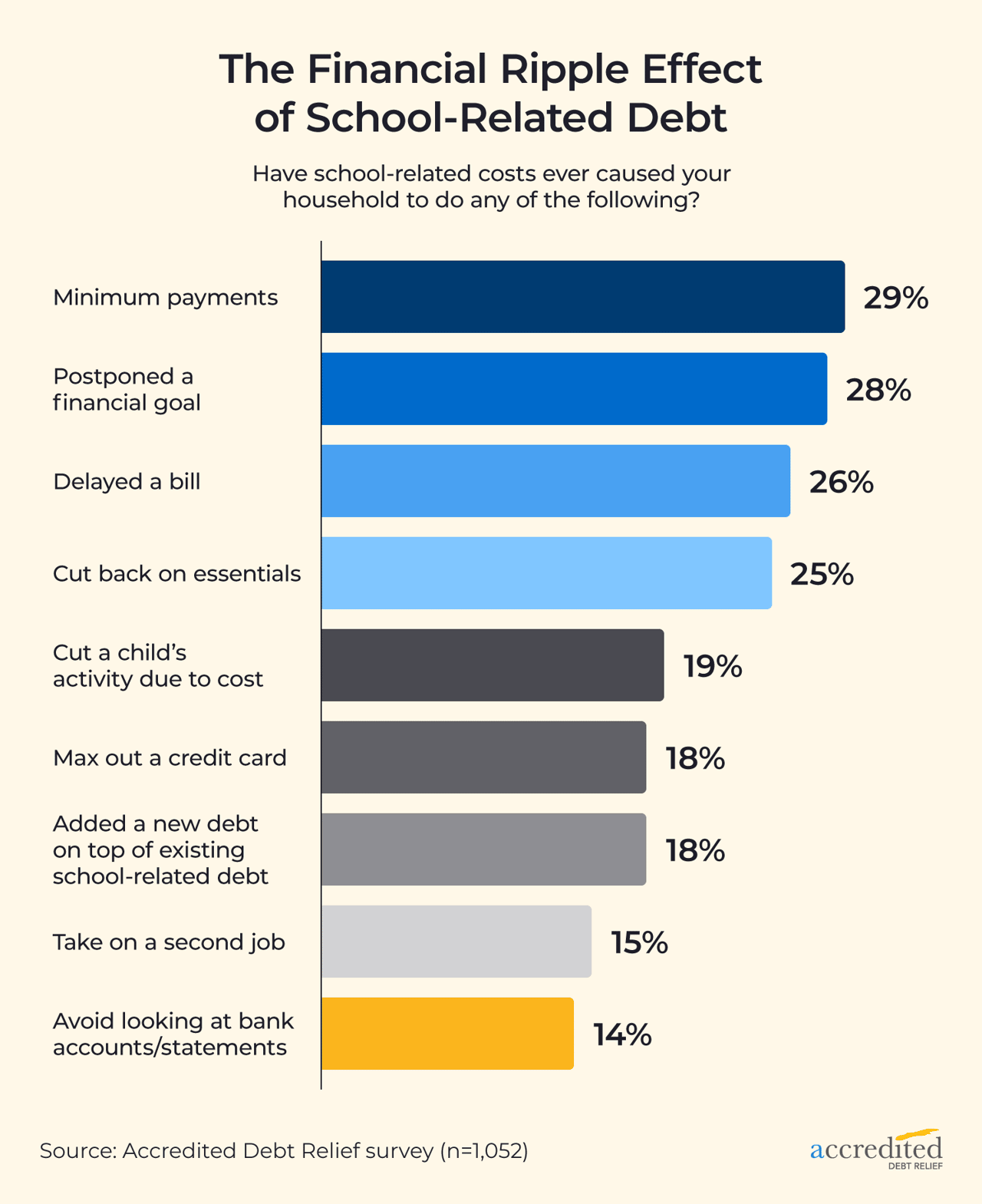
A household’s growing school debt can affect its entire financial picture. Seventy-six percent of parents say school-related costs have led to at least one financial trade-off, reaching well past the school supply aisle.
The most common budget trade-offs happen where families have the least room to maneuver. People say they make minimum payments on debt (29%), postpone savings or debt payoff (28%) and delay bills (26%), all due to school-related costs. Some families have sacrificed important expenses. Twenty-five percent cut back on everyday essentials like groceries or utilities, and 19% kept a child out of an activity because of the cost.
When School Spending Follows You Past August, It’s Worth Taking a Hard Look at the Full Picture
School costs have grown in both size and scope. It’s driving 60% of parents into a cycle of debt, leaving them with unresolved debt when they need to spend even more on their children’s education. This doesn’t end when their children graduate high school. The financial weight of graduation and college continues the cycle.
When families carry a balance, make the minimum payment and add new spending before the old debt clears, a manageable seasonal expense turns into a year-round obligation. Families may need to reevaluate their spending habits and budget if they want to break the cycle.
Methodology
The survey was conducted by Centiment for Accredited Debt Relief. It was fielded from May 22-28, 2026. The results are based on 1,052 completed responses. To qualify, respondents had to be parents or guardians with at least one child currently enrolled in grades K-12. Data is unweighted, and the margin of error is approximately +/-5% for the overall sample, with a 95% confidence level.
This story was produced by Accredited Debt Relief and reviewed and distributed by Stacker.
