JFAC approves tax conformity funding, rejects military scholarships


Originally posted on IdahoEdNews.org on February 20, 2026
By Ryan Suppe and Kevin Richert:
BOISE, Idaho — Budget-setting lawmakers Friday approved additional funding for the state to implement federal tax cuts. But they rejected scholarship funding for National Guard members.
The Joint Finance-Appropriations Committee this week started considering “enhancement” budget requests, which could reverse some of the 4% and 5% cuts that JFAC approved for this fiscal year and next fiscal year, respectively.
JFAC swiftly approved $765,300 for this year for the State Tax Commission. The money would cover the commission’s costs to implement federal tax cuts in President Donald Trump’s One Big Beautiful Bill.
Lawmakers also approved an additional $2.6 million next year for a range of Tax Commission line items, including a property tax education program, new technology and replacement vehicles.
Also Friday, JFAC rejected an “enhancement” that would’ve refunded $190,900 in tuition assistance for Idaho National Guard members. The State Education Assistance Program offers up to $8,000 for tuition and fees at Idaho institutions.
The Idaho Military Division proposed cutting the program to comply with Gov. Brad Little’s order for 3% ongoing budget cuts and JFAC’s proposal for another 2% in cuts. Maj. Gen. Timothy J. Donnellan, commander of the Idaho National Guard, previously told JFAC that it’s a popular program and helps with recruitment, the Idaho Capital Sun reported.
Rep. Codi Galloway, R-Boise, said “process errors” prevented the committee from getting the information it needed on the request. Rep. Kyle Harris agreed before he moved to hold the budget bill in committee.
“It’s not that I don’t support educating our troops,” said Harris, R-Lewiston. “But making budgetary decisions without the information is not the proper thing to do.”
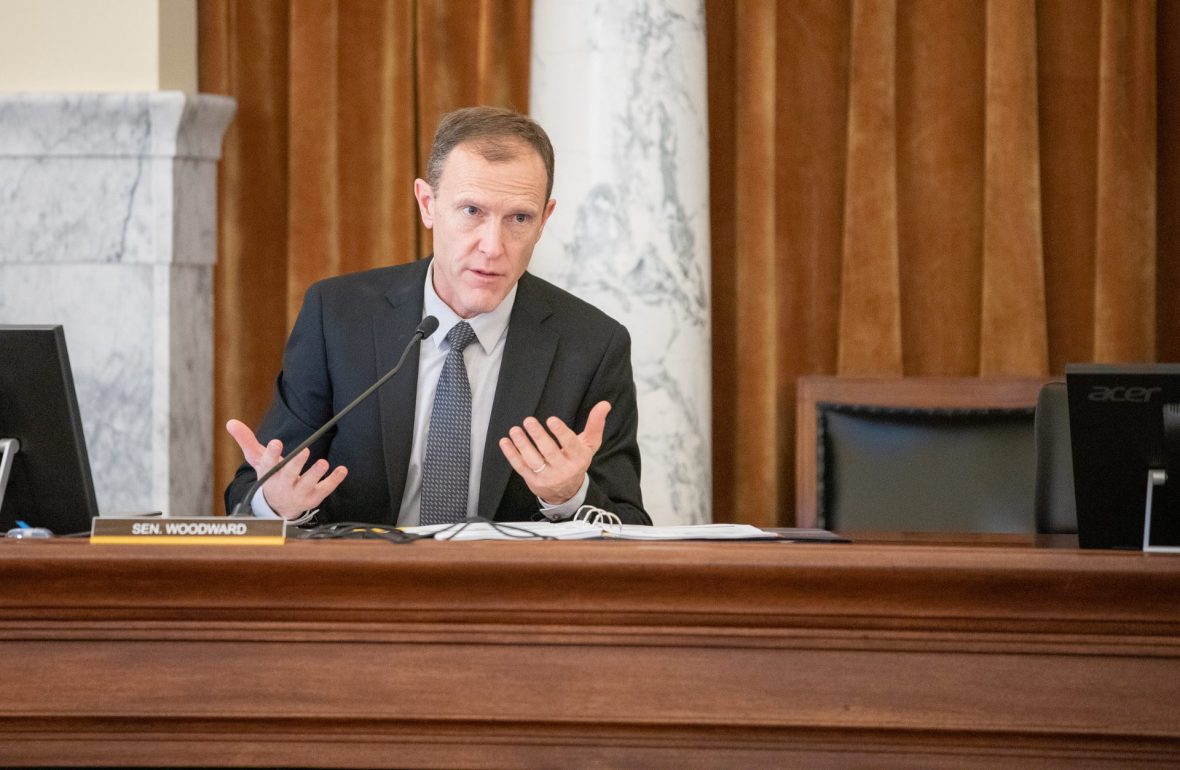
JFAC members could have voted on the motion to hold the bill without explicitly rejecting the tuition assistance. But Sen. Jim Woodward forced a vote to approve or deny it by exploiting the committee’s procedural rules.
Senate Minority Caucus Chair Janie Ward-Engelking first moved to approve the Military Division’s $190,800 “enhancement” request. Then Harris moved to hold the budget.
But Woodward, R-Sagle, made a follow-up motion to approve $190,900, tacking on an additional $100. This was a different motion than Ward-Engelking’s because the dollar amount changed, and rules required that the committee deal with Woodward’s motion before Harris’.
“What we’re voting on here today is $190,000 to support the education of those who have taken an oath to give their lives for ours,” Woodward said.
Woodward’s motion failed on a 7-11 vote. Then Harris’ passed 11-7.
Sen. Glenneda Zuiderveld said voting against the tuition funding gave her “heartburn.” But the Twin Falls Republican argued that the Military Division could have made the cuts elsewhere in its budget. And agencies were gaslighting lawmakers into making challenging cuts, she said.
“I feel like a lot of these items are to teach us a lesson,” Zuiderveld said. “It feels kind of like we’re being gaslit because they’re angry they have to cut.”
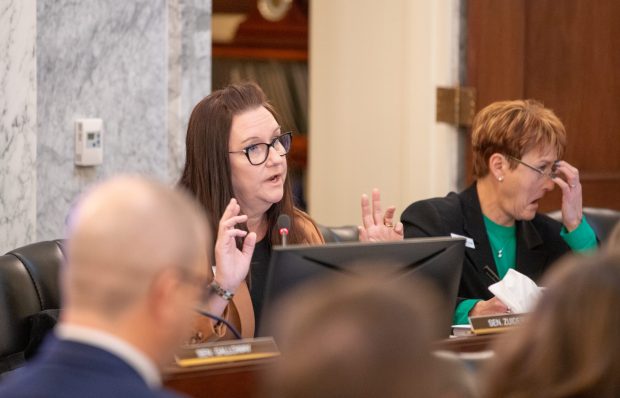
Ward-Engelking, who supported the tuition funding, responded that the Military Division had limited options to make cuts. “This is a very small amount of money that benefits people at the Guard,” the Boise Democrat said.
JFAC members voted to hold the budget request “subject to call of the chair,” which means the committee’s co-chairs could bring it back this session.
These members voted against the tuition funding:
- Sen. C. Scott Grow, R-Eagle and JFAC co-chairman.
- Sen. Phil Hart, R-Kellogg.
- Sen. Cindy Carlson, R-Riggins.
- Sen. Glenneda Zuiderveld, R-Twin Falls.
- Sen. Codi Galloway, R-Boise.
- Rep. Josh Tanner, R-Eagle and JFAC co-chairman.
- Rep. Steve Miller, R-Fairfield.
- Rep. Brandon Mitchell, R-Moscow.
- Rep. Elaine Price, R-Coeur d’Alene.
- Rep. Chris Bruce, R-Kuna.
- Rep. Kyle Harris, R-Lewiston.
These members voted in favor of it:
- Sen. Jim Woodward, R-Sagle.
- Sen. Kevin Cook, R-Idaho Falls.
- Sen. Janie Ward-Engelking, D-Boise.
- Sen. Melissa Wintrow, D-Boise.
- Rep. Rod Furniss, R-Rigby.
- Rep. James Petzke, R-Meridian.
- Rep. Brooke Green, D-Boise.
Moment of silence bill heads to House floor
A bill mandating public schools begin the day with a moment of silence is headed to the House floor.
House Bill 623 would establish a 60-second time for silent reflection, meditation or prayer, with no instruction during that period. Under the bill, teachers “are prohibited from providing instruction” to students, regarding the way they spend their time of silence.

The bill’s sponsor said the bill is not an attempt to “sneak” prayer into the classroom, but simply a chance for students to gather themselves.
“We’ve failed on the suicide rates of our children,” said Rep. Bruce Skaug, R-Nampa. “This little bill may help that.”
Thirty-four states have similar laws. In other states, passage of these laws has coincided with decreased juvenile crime rates, said Mendel Lifshitz, a Boise rabbi who spoke in favor of HB 623.
“I deal with the consequences of our struggling youth,” said Lifshitz, who called HB 623 a “data-driven solution.”
House Education Committee members were conflicted.
Rep. Soñia Galaviz, a public school teacher, said she appreciates the value of quiet reflection in school. But Galaviz, D-Boise, said the bill was an overreach.
“We don’t need to mandate things like this,” she said. “This is something a teacher can come to thoughtfully.”
Rep. Dale Hawkins, the committee’s chairman, said the bill’s intent is straightforward. “I don’t believe there’s any ghost in the machine that we like to chase so often,” said Hawkins, R-Fernwood.
The committee approved HB 623 on a 10-4 vote.
School staff definitions bill clears committee
The House Education Committee also approved an intricate bill that seeks to define school administrative roles.
The definitions would “provide a clear, consistent picture of administrative, instructional, and other staff roles for the purposes of state funding and accountability,” according to the statement of purpose for the 19-page House Bill 728.
Heather Williams of the Idaho Association of School Administrators testified against the bill, saying the tightened definitions could hamstring local schools. She also said the new definitions should be addressed in a larger discussion about Idaho’s school funding formula.
House Education members fumbled to figure out their next move. Rep. Douglas Pickett, R-Oakley, motioned to hold the bill for a week in order to give lawmakers time to study it. “I can read the committee, and we are confused.”
The co-sponsor of the bipartisan bill said the proposal has been two years in the making, and legislative staff and the Idaho Department of Education have vetted it. “The due diligence has been done,” said Rep. Monica Church, D-Boise, who is working on the bill with Rep. Kyle Harris, R-Lewiston.
Rep. Barbara Ehardt also urged the committee to move the bill, saying it would help policymakers finally track education dollars. “I am ready to roll,” said Ehardt, R-Idaho Falls. “These are questions we have had forever.”
Pickett’s motion to postpone a vote failed on a 6-8 vote. After that, the committee voted unanimously to send HB 728 to the House floor.
Executive order, new bill formalize Idaho's participation in federal tax credit
Republican state leaders are going an extra mile to ensure Idahoans have access to a federal school choice tax credit.
Gov. Brad Little issued an executive order Thursday directing the Idaho Department of Education (IDE) to implement the program. Meanwhile, a new bill moving through the House would essentially codify the same directives in state law.
The $1,700 tax credit was created as part of President Donald Trump’s One Big Beautiful Bill Act. It refunds taxpayer donations to nonprofit scholarship granting organizations (SGOs). The SGOs, in turn, offer scholarships to students — in public or private schools — to pay for education expenses, including tuition, supplies and tutoring.
Idaho students will be able to claim the credit in 2027. For private schoolers, the federal reimbursement is an option in addition to the $5,000 to $7,500 state tax credit that the Legislature and governor enacted last year through House Bill 93.
“Idaho is proud to be the only state offering education freedom from kindergarten through career,” Little, a Republican, said in a news release Thursday. “My executive order strengthens our commitment to ensuring every parent has the opportunity to choose the education environment that best fits their child.”
Little quietly opted in last month. This week’s executive order formalizes a directive for IDE to oversee a list of eligible SGOs.
House Bill 731, meanwhile, would codify nearly identical language. Rep. Douglas Pickett, R-Oakley, and Sen. Tammy Nichols, R-Middleton, are the co-sponsors.
House Speaker Mike Moyle said Friday that the bill makes Idaho’s participation in the program permanent while executive orders can expire.
“The governor did his executive order and got it started, and now we’ll just codify it,” said Moyle, R-Star. “It’s more choice for education and more opportunities for the students in the state of Idaho. It’s a great thing.”
Other state leaders celebrated the new program in a news release from the governor’s office.
“Every student learns differently and deserves an education that reflects their individual strengths and needs,” said Senate Majority Leader Lori Den Hartog, R-Meridian.
“By expanding education freedom, we’re responding to Idahoans and ensuring parents have greater access to options that meet their child’s individual needs,” said House Majority Leader Jason Monks, R-Meridian.
“This is a chance to give Idahoans more – more support, more resources and more options – without taking away from what we already have,” said State Superintendent of Public Instruction Debbie Critchfield, a Republican.
But not everyone is on board. A coalition of public education advocates Thursday released statements condemning Idaho’s involvement in another subsidy for private education “at the expense of Idaho taxpayers” — this time, without public input.
The House Revenue and Taxation Committee on Thursday sent the bill to the House floor after introducing it. Typically, a new bill would have a public hearing first.
“Shutting out public input on a proposal of this magnitude undermines transparency and public trust,” Diane Garvey, president and founder of Idaho Children are Primary, said in a news release. “This is not good governance. And this is not good for Idaho children.”